September 9, 2026 · 6 min de citit
Dr. Muscle vs Workout With Me
Dr. Muscle vs Workout With Me este o luptă între două filozofii: ajustezi după ce eșuezi sau prevezi recuperarea și planifici în funcție de ea. Review-ul meu sincer.
September 11, 2026 · 8 min de citit
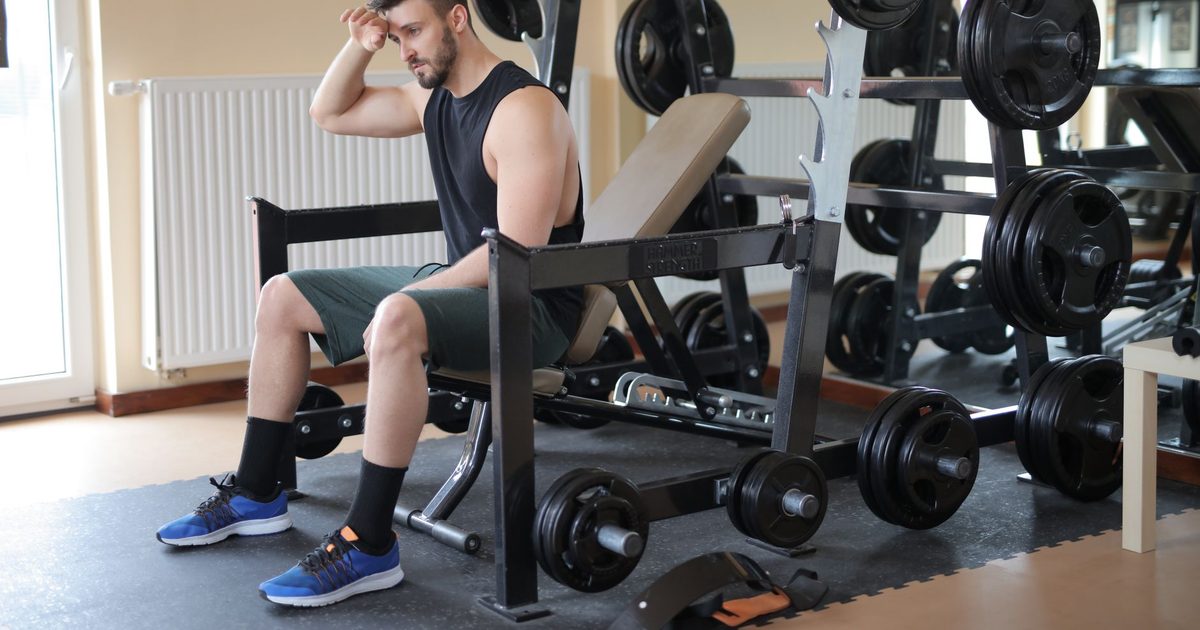
I was staring at 225 pounds on the bar last Tuesday, a weight I usually warm up with for easy reps, and it felt like an absolute house. My knees were shaking before I even unracked it. That was the moment I realized I had ignored the warning signs of overtraining for three weeks straight. I had been sleeping poorly, my joints were aching, and my motivation was completely dead. But I kept going because I thought consistency meant never taking a day off. That's a massive mistake that almost every serious lifter makes at some point.
We are told that progress is a straight line. We think that if we just put in the hours and sweat through the pain, our bodies will have no choice but to grow. But your muscles don't grow during the workout. They grow when you are lying on the couch, sleeping, or eating. If you don't give them that time, you are not building muscle. You are just tearing down a house that's already on fire.
Why do we fall for this? Because hard work feels good. It's easy to buy into the internet culture of endless grind. We see videos of people lifting heavy weights every single day, shouting about having no excuses. It makes you feel like any day you spend resting is a day you are getting weaker.
I used to think this way. I'd hit the gym six days a week, pushing every single set to failure. If my shoulders hurt, I took some ibuprofen. If I was tired, I drank another scoop of pre-workout. I convinced myself that my body was just being lazy.
But biology doesn't care about your grit. When you lift weights, you create microscopic tears in your muscle fibers. Your body needs resources to patch those tears up and make them stronger than before. If you hit the same muscle again before it finishes that repair process, you interrupt the cycle. Do this enough, and your body enters a state of chronic stress. Your progress stalls. Your strength drops. You get hurt. The belief that more is always better is the single biggest trap in fitness.
So how do you know if you are crossing the line? True overtraining is a systemic issue. It's not just having sore legs after leg day. It affects your hormones, your nervous system, and your immune system.
The first clue is what I call the tired but wired state. You feel completely exhausted all day long, but when your head hits the pillow at night, your brain is racing. You can't sleep. This happens because your nervous system is stuck in a constant fight or flight mode. Your cortisol levels are spiked, keeping your body on high alert when it should be recovering.
Let us look at the hormonal side of this. When you train too hard for too long, your body alters its hormone production. Your testosterone to cortisol ratio shifts. Cortisol is a catabolic hormone, meaning it breaks tissue down. Testosterone is anabolic, meaning it builds tissue up. When cortisol dominates, your body enters a state where it is actively breaking down muscle tissue to use for energy, even if you are eating plenty of protein. This is why you might notice your muscles looking flat or deflated, rather than full and pumped. You are losing the battle against your own training volume.
Another clear sign is a sudden jump in your resting heart rate. If you track your heart rate in the morning, you might notice it sits around 60 beats per minute. If you wake up three days in a row and it's at 68 or 70, your body is working overtime just to keep you alive and functioning. It's struggling to recover from the stress you are putting it through.
You might also notice that minor aches don't go away. A little tightness in your elbow or a dull ache in your knee starts lingering for weeks. Your immune system gets sluggish too. You might find yourself catching every cold that goes around the office, or taking twice as long to get over a simple sniffle. These are the classic warning signs of overtraining that tell you your system is running on empty.
Let us talk about a concrete way to test this on any given day. You don't need a laboratory or a blood test to see if your nervous system is fried. You can use what I call the 10 percent warmup rule.
Think about your standard working weight for an exercise, let us say the bench press. If your working set is 200 pounds, your last warmup set might be 150 pounds. Usually, that 150 pounds feels light. It moves fast. You don't even have to think about it.
If you unrack that 150 pounds and it feels like 180, or if your bar speed drops significantly, that's a major red flag. Specifically, if the bar takes more than two seconds to complete a path that usually takes one second, your motor unit recruitment is compromised. Your brain is refusing to fire your muscle fibers at full capacity because it knows the tissue is not ready.
When this happens, don't try to be a hero. Don't slap the extra weight on anyway and grind out ugly, dangerous reps. If your warmup weight feels heavy, your body is telling you that your recovery is lagging. The smartest thing you can do is cut your working weight by 10 percent for that session, or simply pack your bag and go home. One missed workout won't ruin your progress. A torn pectoral muscle or a wrecked rotator cuff will.
Have you ever walked into the gym, grabbed a pair of dumbbells you usually lift easily, and felt like your hands were made of butter? You can't seem to hold onto the bar. Your forearms burn instantly.
This is not a muscle problem. It's a central nervous system problem. Your grip strength is a direct window into your neurological recovery. When your brain is fatigued from overtraining, the electrical signals it sends to your muscles weaken. Because your hands and forearms rely on highly complex, precise motor control, they are the first things to suffer when those signals degrade.
You can test this easily. If you have a simple grip dynamometer, squeeze it every morning. Or just pay close attention to how your hands feel on your first couple of warmups. If your grip feels weak and sluggish, your whole body is likely underrecovered. Your nervous system is telling you to back off. Ignoring this warning sign is a fast track to a training plateau.
Once you spot these signs, you have to change how you approach your training week. You can't just keep using the same static schedule. You need to transition to a style of training that adapts to your actual state of readiness. This is where recovery-based training makes a massive difference.
Instead of forcing yourself to train chest every Monday just because it's Monday, you look at how recovered your muscles are. If your chest is still sore and your warmup weights are moving slowly, you don't train chest. You train something else that is fully recovered, or you take an extra rest day.
This changes your weekly schedule from a rigid calendar to a fluid cycle. A training cycle shouldn't be a fixed seven-day week. It should be a sequence of workouts that you complete only as fast as your recovery allows. If it takes you nine days to get through your chest, back, and leg sessions because you needed extra rest in between, that's fine. It's much better for your long-term strength than forcing those workouts into seven days and burning out.
After completing four of these training cycles, you automatically take a deload during the fifth cycle. This isn't a week of sitting on the couch. It's a structured period where you reduce your volume and intensity to let your joints and nervous system fully catch up. This cyclical approach prevents you from ever hitting that wall where overtraining takes over.
I built Workout With Me to solve this problem. I wanted something that would help me track my recovery visually without making me guess. In the app, we have a color-coded body map that tracks your recovery across 19 different muscle subcategories. When you log a heavy squat session, your quads and hamstrings light up as crushed on the map. They fade back to neutral as they recover.
The app uses a research-based training engine called S.H.A.R.P. to generate progressive overload plans. The smartest part of this engine is that a muscle must be at least 80 percent recovered before the engine will schedule it for another workout. If your shoulders are still recovering, the app won't give you a shoulder workout. It forces you to wait until your body is ready. You can also manually tap muscles on the map to mark them as crushed if you did a tough activity outside the app, like a pickup basketball game or a long hike. The engine will automatically adjust your plan around that real-world fatigue.
Listening to your body is not about being soft. It's about being smart. If you learn to read the warning signs of overtraining and adjust your weekly schedule to match your recovery, you will build more muscle and stay healthy for years to come.
If you want to stop guessing and start training with your recovery in mind, download Workout With Me. It's live on iOS and Android, and the social features are free forever. Let's build some real strength together.
September 9, 2026 · 6 min de citit
Dr. Muscle vs Workout With Me este o luptă între două filozofii: ajustezi după ce eșuezi sau prevezi recuperarea și planifici în funcție de ea. Review-ul meu sincer.
September 5, 2026 · 6 min de citit
Multe generatoare de antrenamente cu AI sunt doar ChatGPT cu o interfață nouă. Iată cum să recunoști un motor real înainte să plătești.

August 31, 2026 · 6 min de citit
JuggernautAI vs Workout With Me este o problemă de scop. Unul e specialist în powerlifting, celălalt îți organizează săptămâna în funcție de recuperare.