
Train Based on Your Recovery Status
The program is built from where your body is, not from a calendar. No excuses, no guesswork.



Also on Google PlayAlso on iPhone
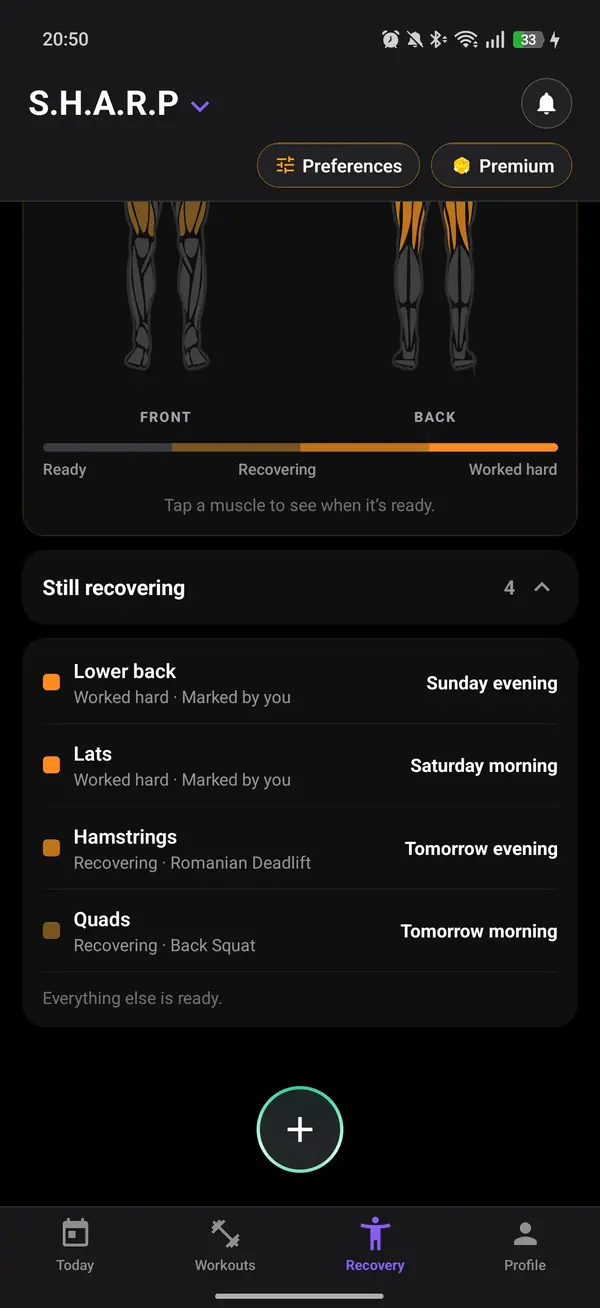
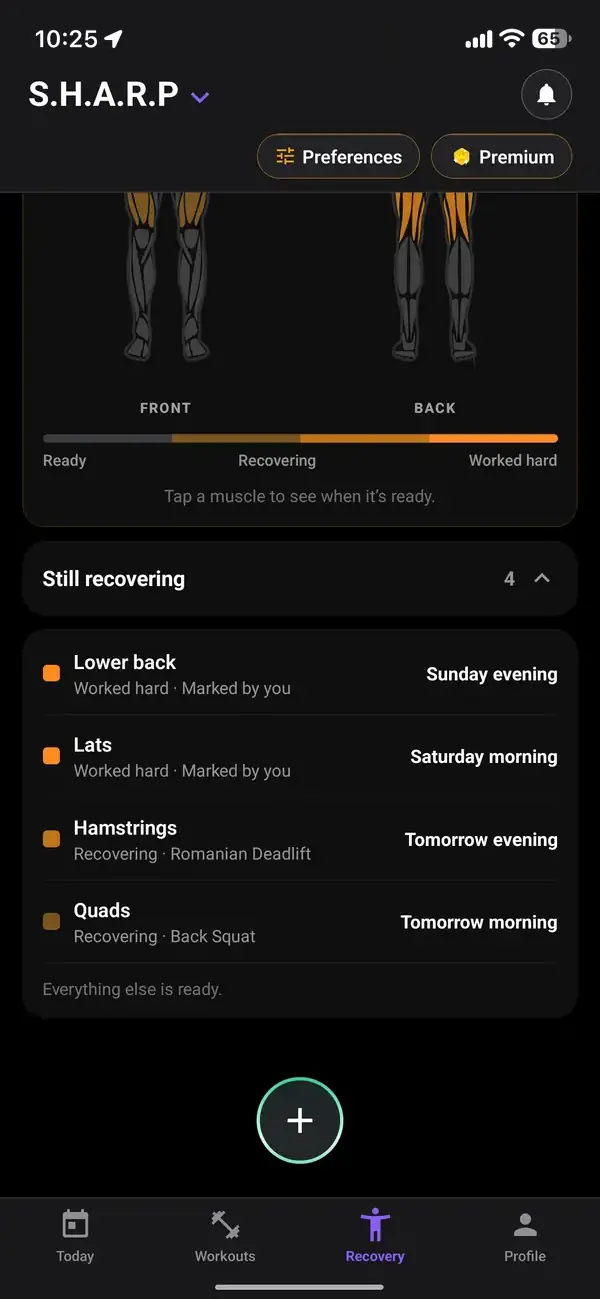
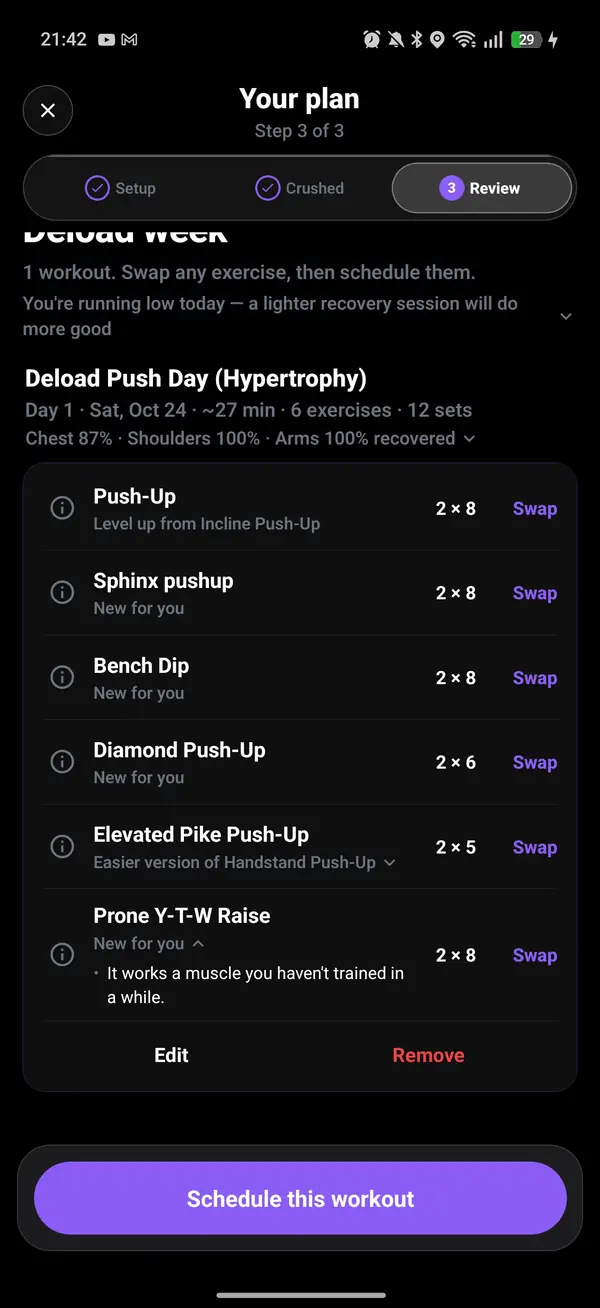
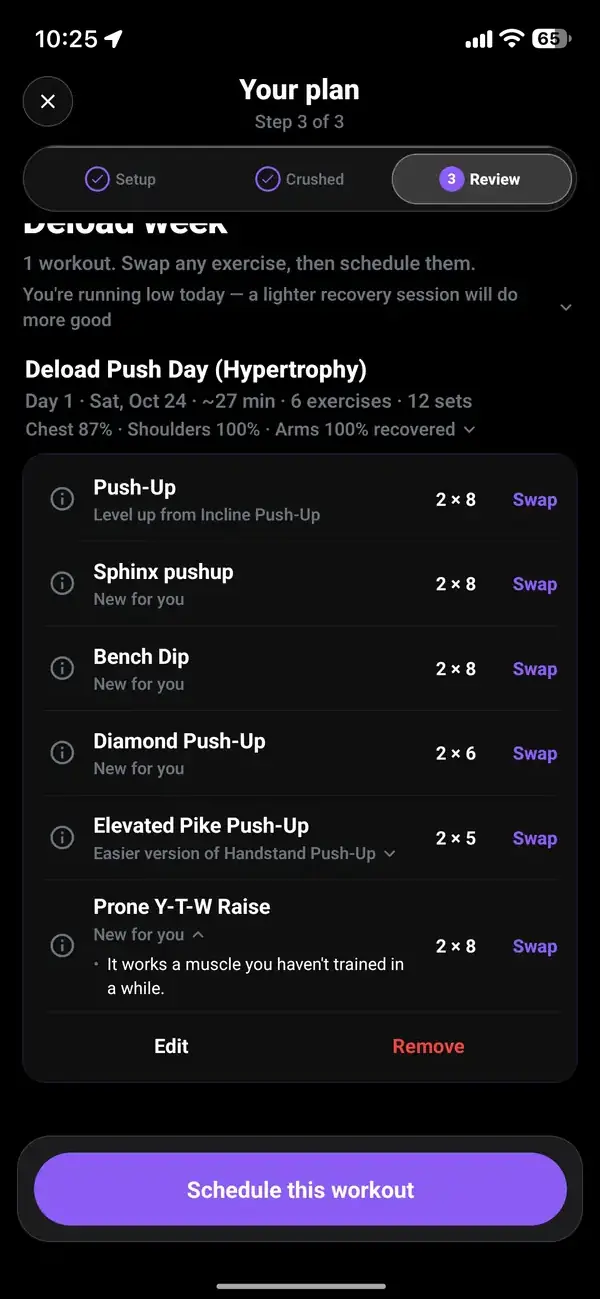
In the app, the plan follows the map
S.H.A.R.P reads where each muscle stands and builds the next session from the ones past about 80% recovered. Nothing to reshuffle when your week changes.
Readiness picks the session
Every logged set feeds the body map, main movers more than helpers. What's ready goes into the next plan, and what's still recovering waits its turn.
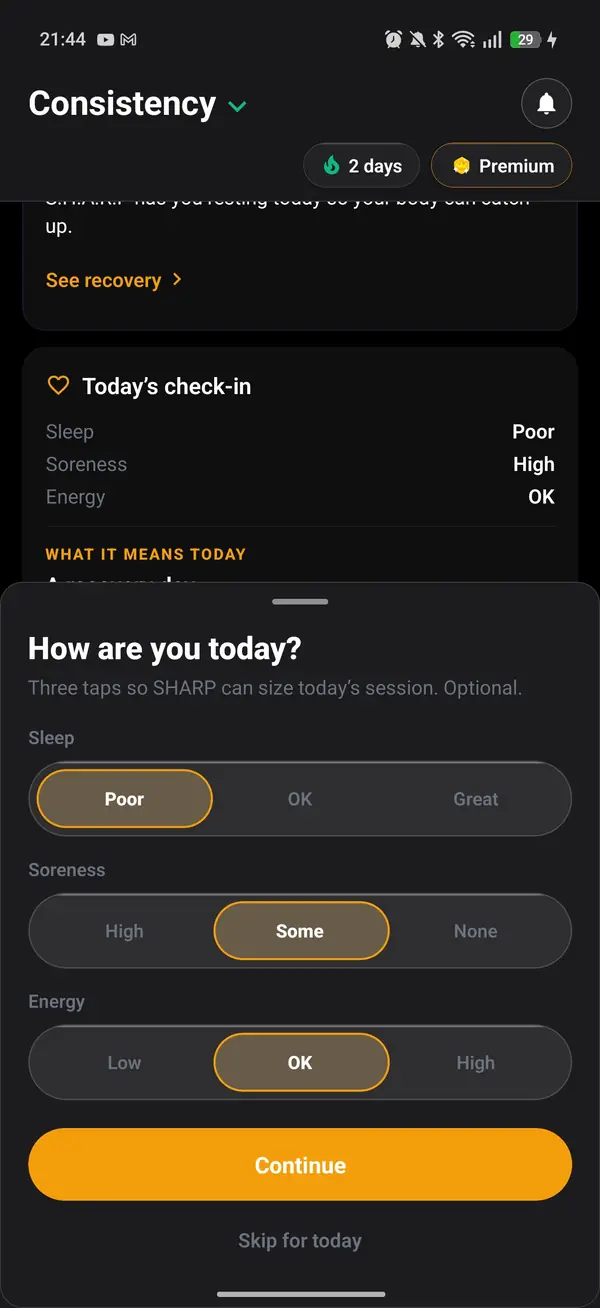
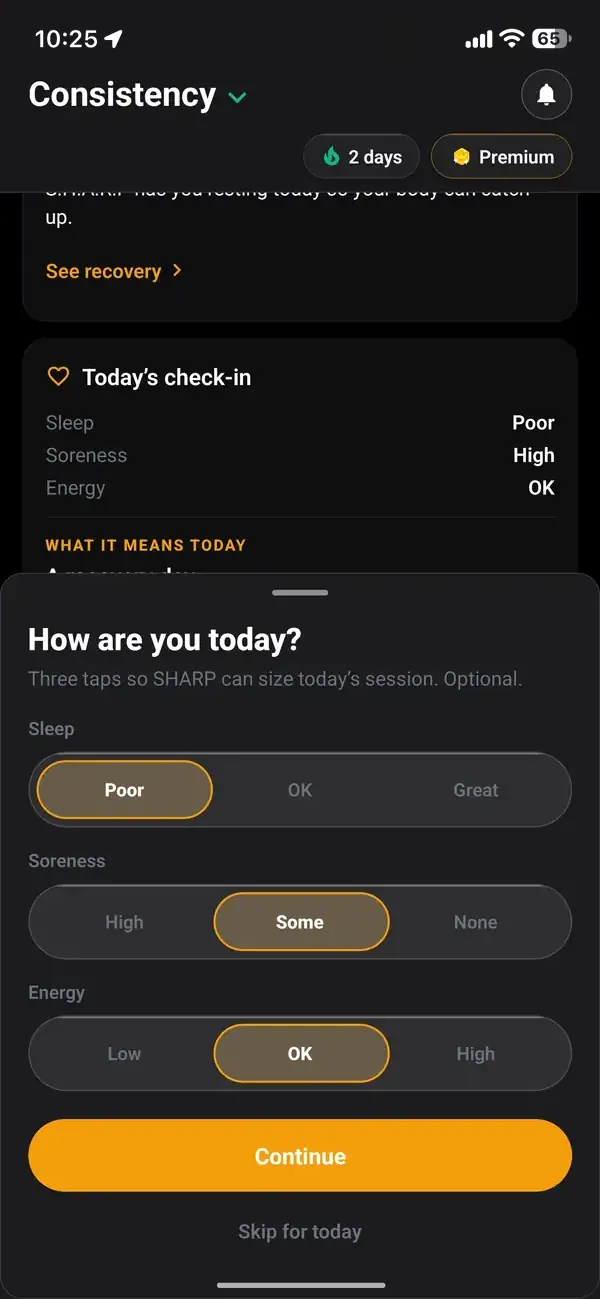
Today gets a say too
Sleep, soreness and energy, three taps. A poor day gets a lighter plan, and a string of them can bring a deload forward. Skip it whenever you like.
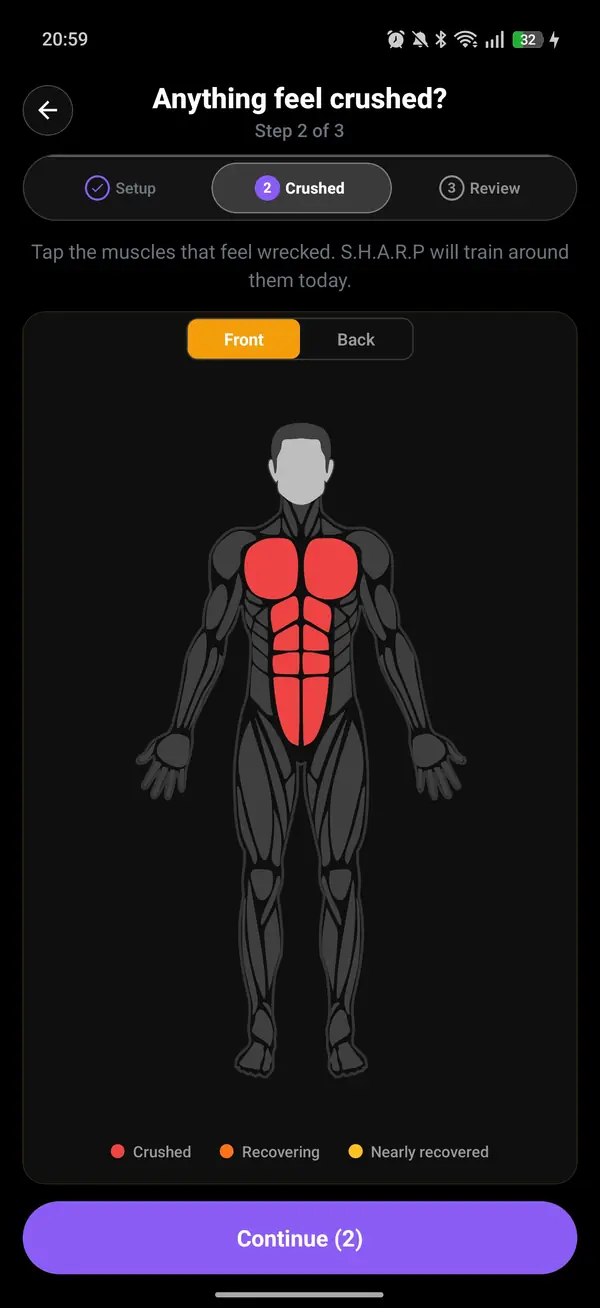
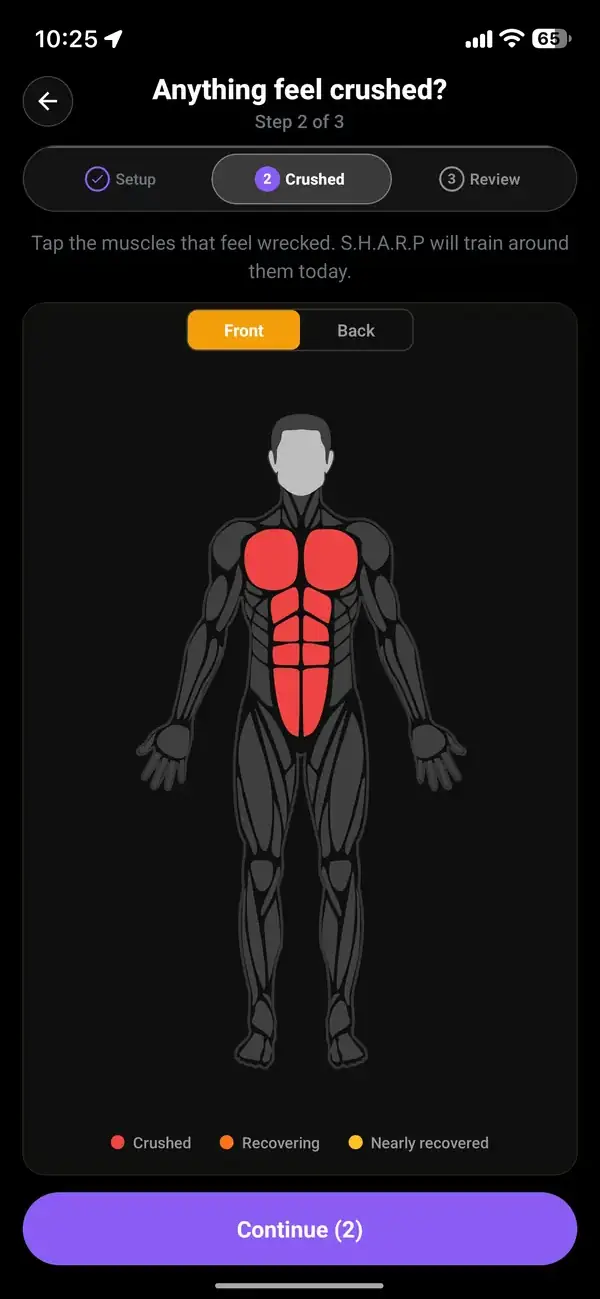
Training it never saw
Played five-a-side or did a spin class? Mark the muscles that feel crushed and the plan steers around them for a day or two.
Ready doesn't mean max out
A muscle past 80% can take a hard session, not every set taken to failure. Leave a rep or two in the tank on most sets and you bounce back sooner, which is what lets you train each muscle more often.
Try it with a notebook
Write down the date you last trained each big muscle group hard. Before a session, pick the group with the oldest date that feels fine on a warm-up set, and train that. It's rough, but it's the same idea the app runs muscle by muscle.
Keep exploring Workout With Me
How recovery-based training picks today's session
Recovery-based training means you train a muscle when it has recovered enough to work hard again, not because the calendar says it's that muscle's day. Your split still gives the week its shape, but readiness decides which session comes next.
A printed program says Monday is chest. Then Saturday turns into a long bench session with a friend who wanted a spotter, and on Monday you're looking at the same muscles again. A calendar plan leaves you two bad options here: press on tired muscles, or skip the day and fall behind the sheet. Recovery-based training removes the dilemma, because the plan was never tied to Monday in the first place. You do whichever session your recovered muscles allow, and chest comes back round when it's ready.
The weekly rhythm stops being fixed, and that's the point. If life gives you three free evenings one week and five the next, a calendar program breaks while a recovery-based one just shifts, because each session is chosen from what has come back since the last. Missed days hurt less too. Nothing is overdue the way a skipped Monday is overdue, and a muscle left alone for a while simply becomes the obvious next choice.
It isn't a licence to train hard every day. Recovery is local and whole-body at once: your legs can be clear while your sleep, your stress and your overall training load say you need an easier stretch, which is why planned deloads still matter in this approach. Soreness makes a poor gauge here as well, since it fades on its own schedule and often says more about how new an exercise was than how much it took out of you.
Workout With Me tracks your recovery muscle by muscle from the sets you log, free on iPhone and Android. The S.H.A.R.P engine then builds each session from that state and only schedules muscles that are at least 80% recovered. New accounts get a limited number of S.H.A.R.P plans to try it, and WWM Pro unlocks it in full from $7.99 a month.