
A Muscle Recovery Tracker That Actually Plans Around You
19 muscle groups, one body map, and your next workout built from it.



Also on Google PlayAlso on iPhone
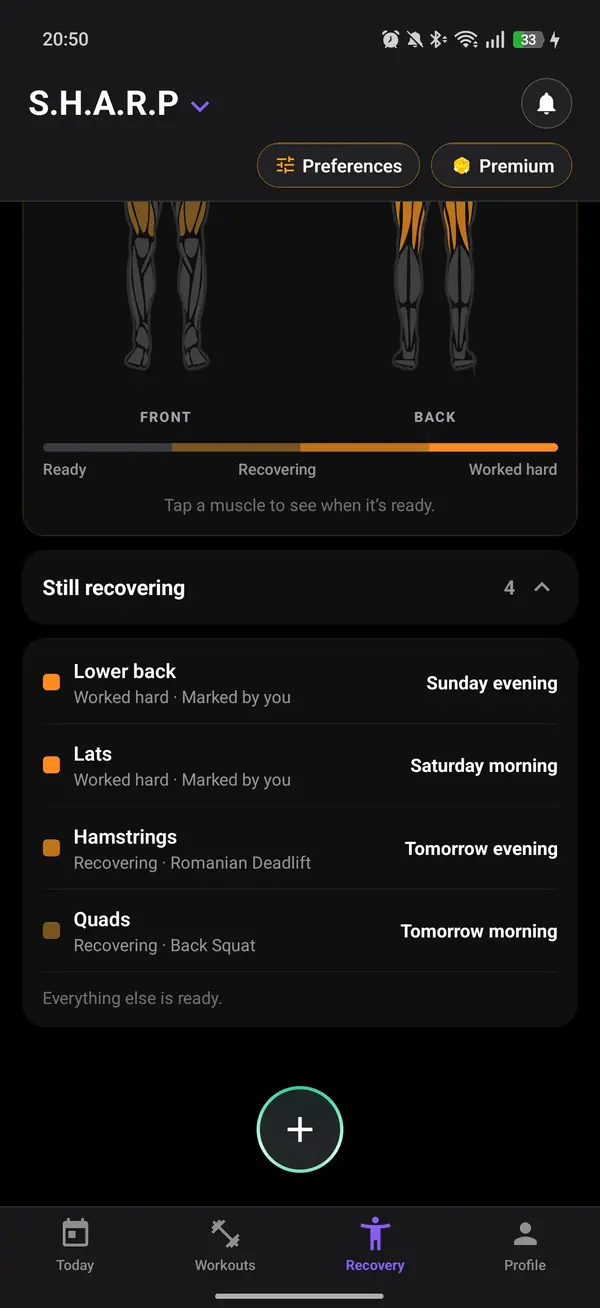
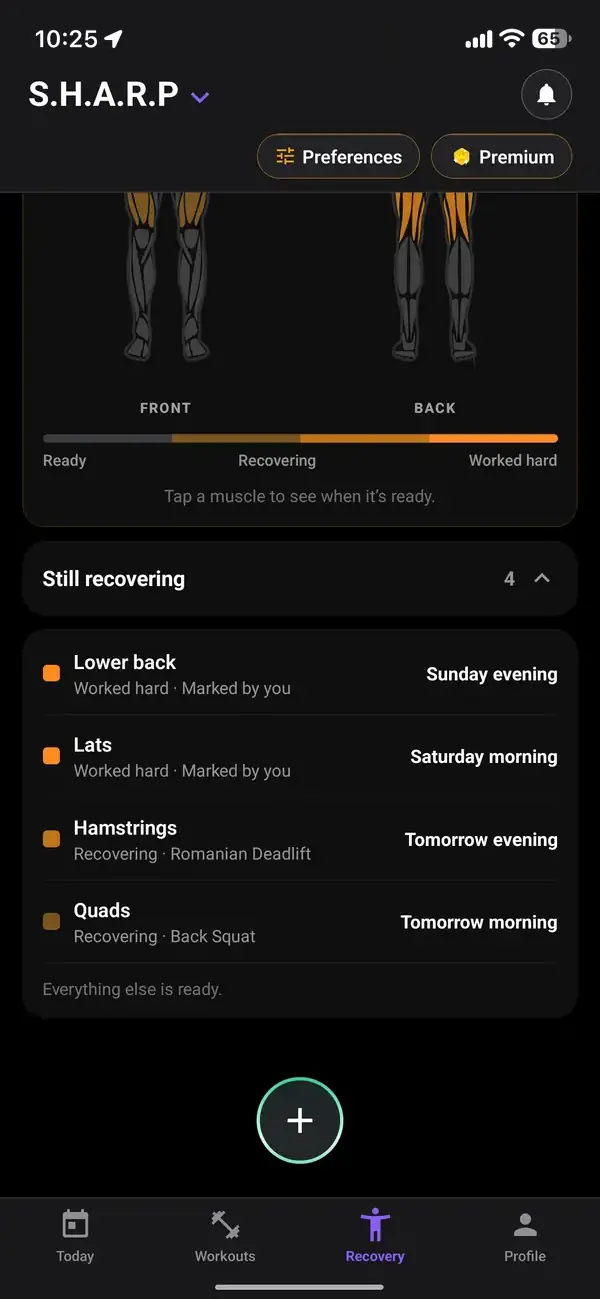
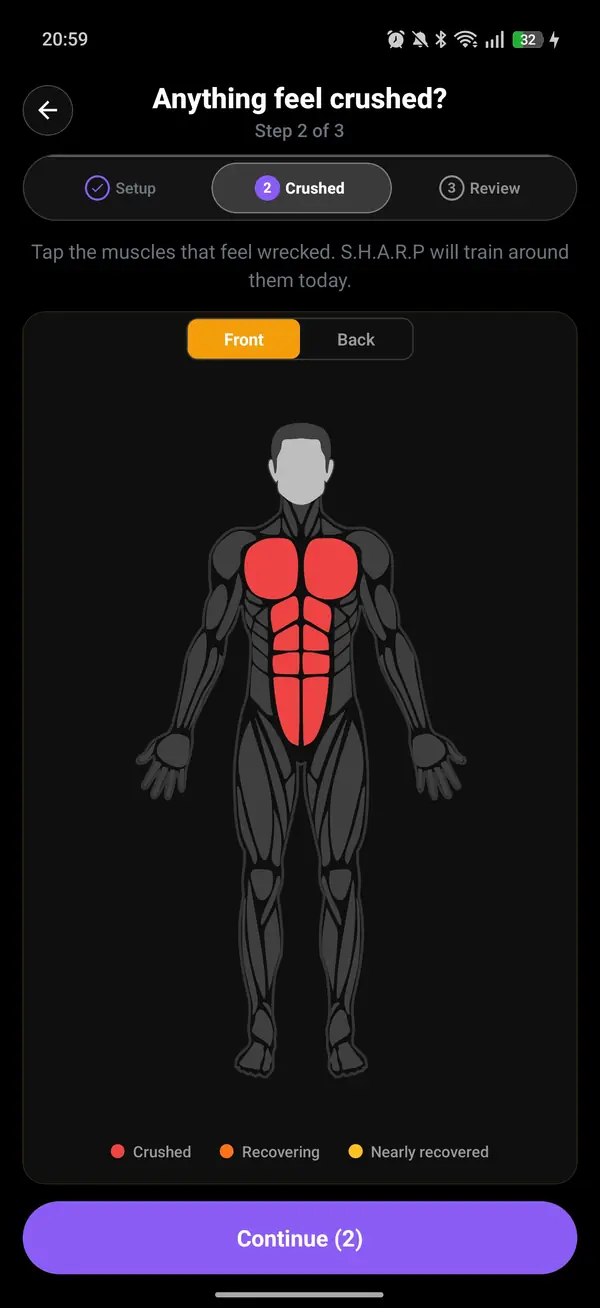
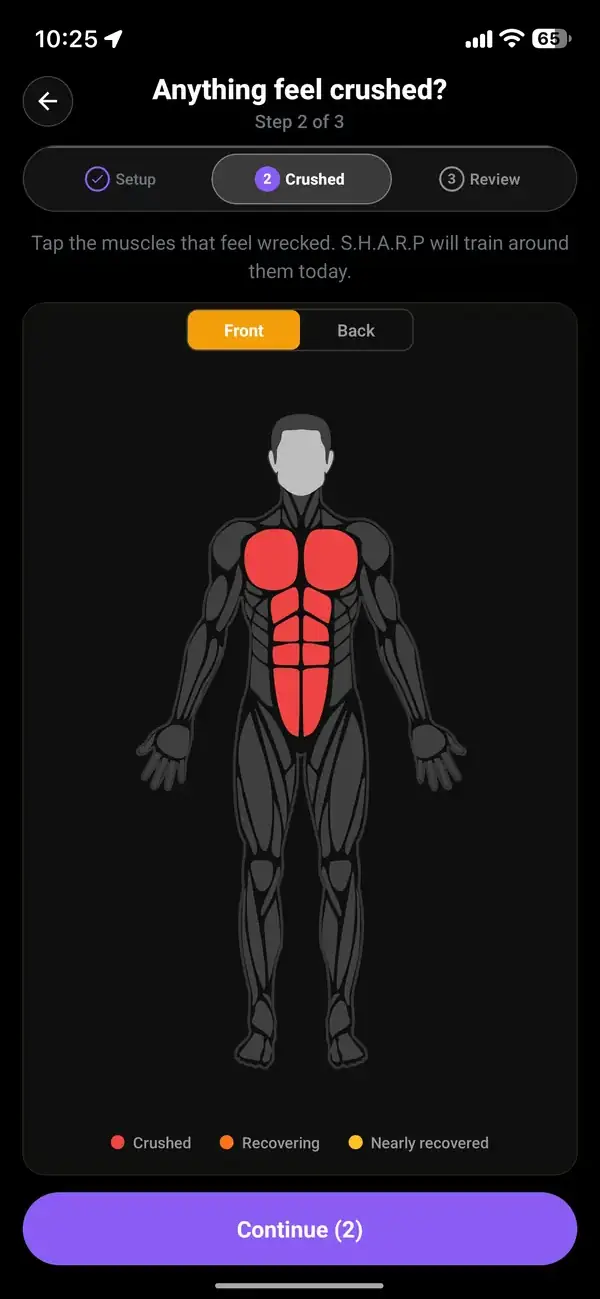
In the app, you never fill this in
Every set you log paints itself onto your body map, muscle by muscle. Then it adjusts for the things a table can't know.
Logged sets, not guesses
Each exercise counts toward the muscles it works, so a deadlift moves your back, glutes and hamstrings at once.
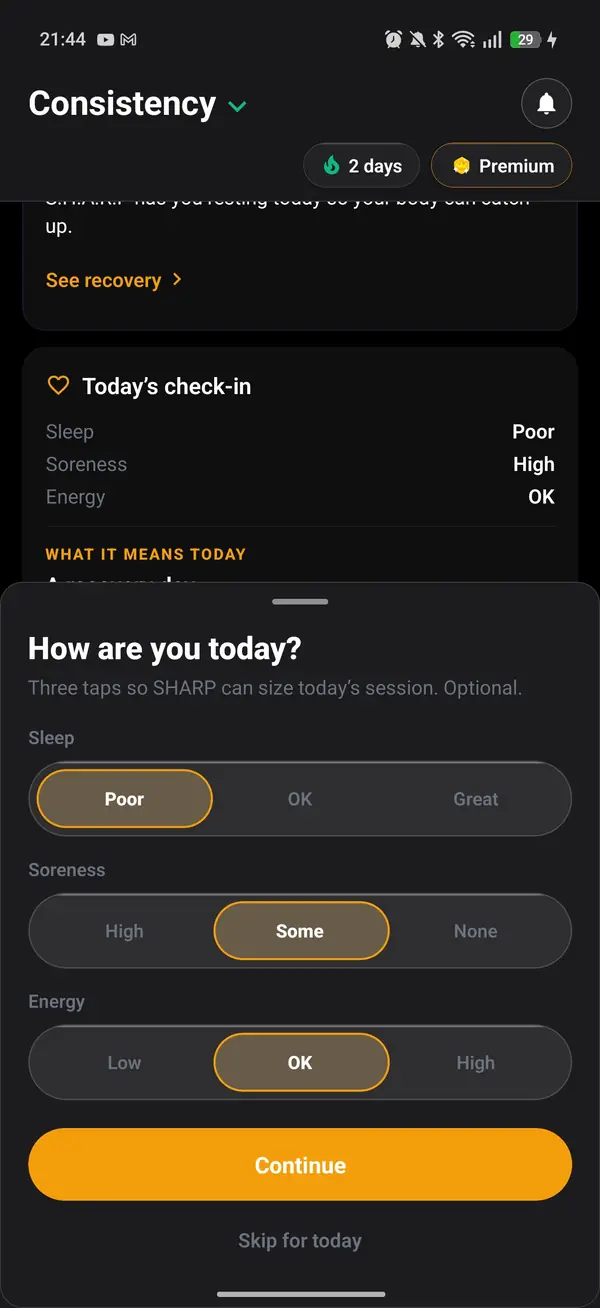
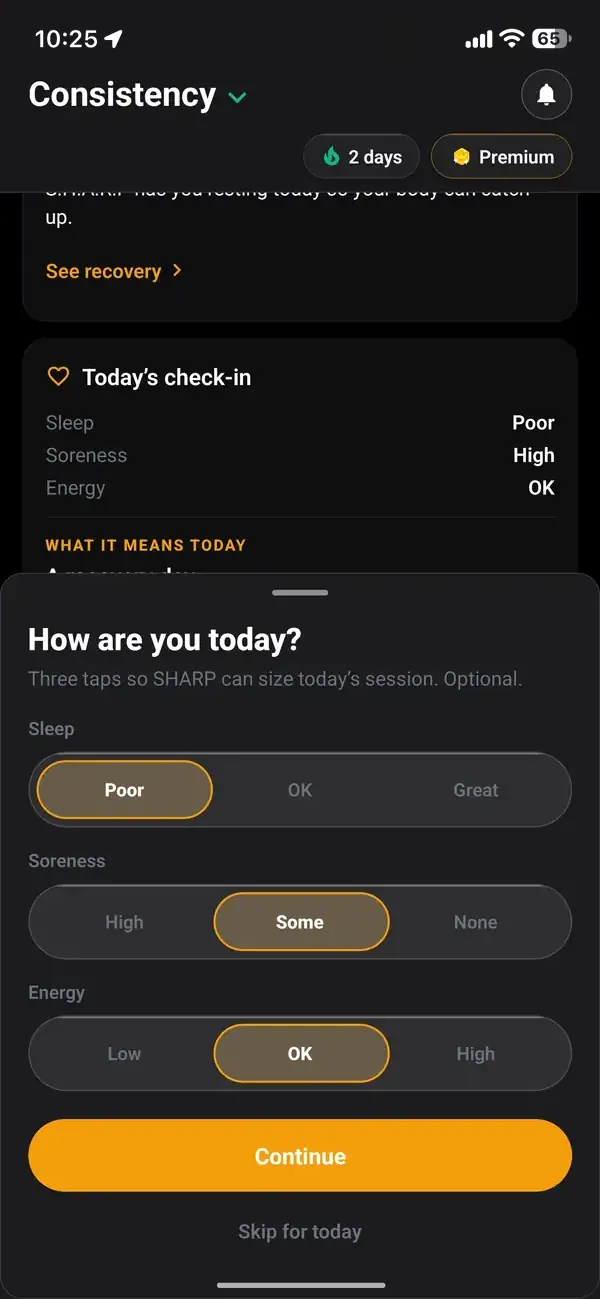
A 3-tap check-in
Bad sleep or heavy soreness makes the day's plan lighter. Skip it whenever you like.
Tell it what feels wrecked
Mark a muscle as crushed and the next plan works around it for a day or two.
Why 80%, not 100%
Waiting for full recovery leaves you training each muscle less often than you could. Past about 80% the muscle can take a hard session again, and the last stretch finishes while you train something else.
Signs a muscle needs longer
It is still sore to press or stretch, your warm-up sets feel heavier than last time, you slept badly for a couple of nights, or your reps drop on the first working set.
Keep exploring Workout With Me
How a muscle recovery tracker turns logged sets into a body map
A muscle recovery tracker estimates how far each muscle has recovered since you last trained it and shows the result on a map of your body. You check it before a session to see what's ready to work hard and what still needs time.
Plenty of watches give you a readiness score in the morning, and it can be a useful read on your sleep and your body as a whole. It can't tell you that Wednesday's Romanian deadlifts left your hamstrings well short of ready while your chest and shoulders are completely clear. A muscle recovery tracker answers that narrower question, which happens to be the one that decides what you do in the gym tonight. It doesn't need a sensor either, because the cause of the fatigue is the training itself, and that's already in your log.
Under the map, every logged set starts a clock on each muscle the exercise trained. The muscle that moved the weight gets the longest clock and a supporting muscle a shorter one, and all of them scale with your training experience. Because Workout With Me tracks 19 subcategories rather than six broad regions, lateral raises land on the side of your shoulders while an overhead press lands mostly on the front, and the Muscle Breakdown puts a percentage and the time left on each.
A tracker is only as good as its inputs. A session you didn't log, a five-a-side match or a spin class leaves the map looking fresher than you are, which is why Mark crushed muscles exists: tap the muscles that feel wrecked and the tracker counts them as trained. It also models training load only, so a run of bad sleep or a heavy week at work will slow your real recovery in ways no map can show.
How much rest a muscle needs between workouts comes down to its size, how directly the last exercise loaded it and how long you've trained, so a muscle recovery tracker and a recovery time calculator both work muscle by muscle.
On Workout With Me the tracker, the Muscle Breakdown and workout logging are free on iPhone and Android, with nothing to wear or charge. WWM Pro, from $7.99 a month, connects the tracker to the S.H.A.R.P engine. Any muscle at 80% or better then becomes part of your next planned session.