
The Deload Week That Arrives on Time
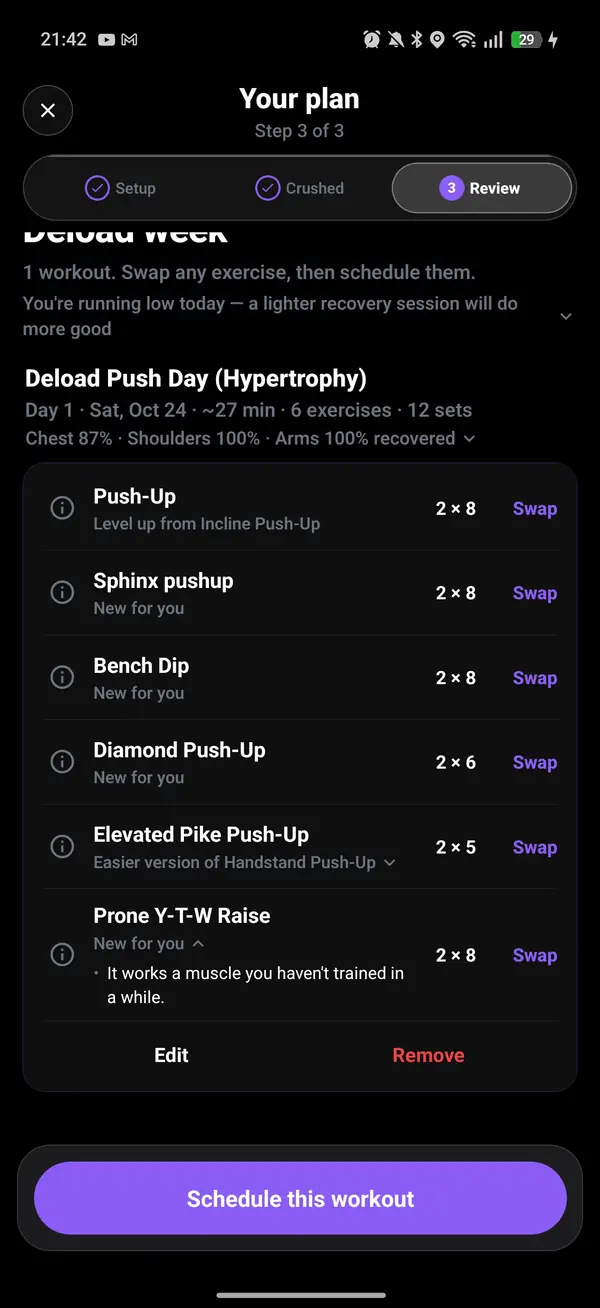
A planned lighter week of training. You keep the same lifts, at about 65% of your max for 12 to 15 reps, with half your usual sets, so the fatigue from hard weeks clears and your lifts keep climbing.
Why these numbers
About 65% of your max for 12 to 15 reps keeps the movement and the habit while the load drops well below what tires you out. Halving the sets cuts the total work, and capping effort at RPE 6 stops a light day turning hard. It is the same rule the full deload calculator and the app use.



Also on Google PlayAlso on iPhone
When you need one
- Weights that moved easily now feel heavy for two sessions in a row.
- Joints ache more than muscles.
- You are sleeping badly or dreading the gym.
- You have trained hard for several weeks without a lighter one.
How the app decides
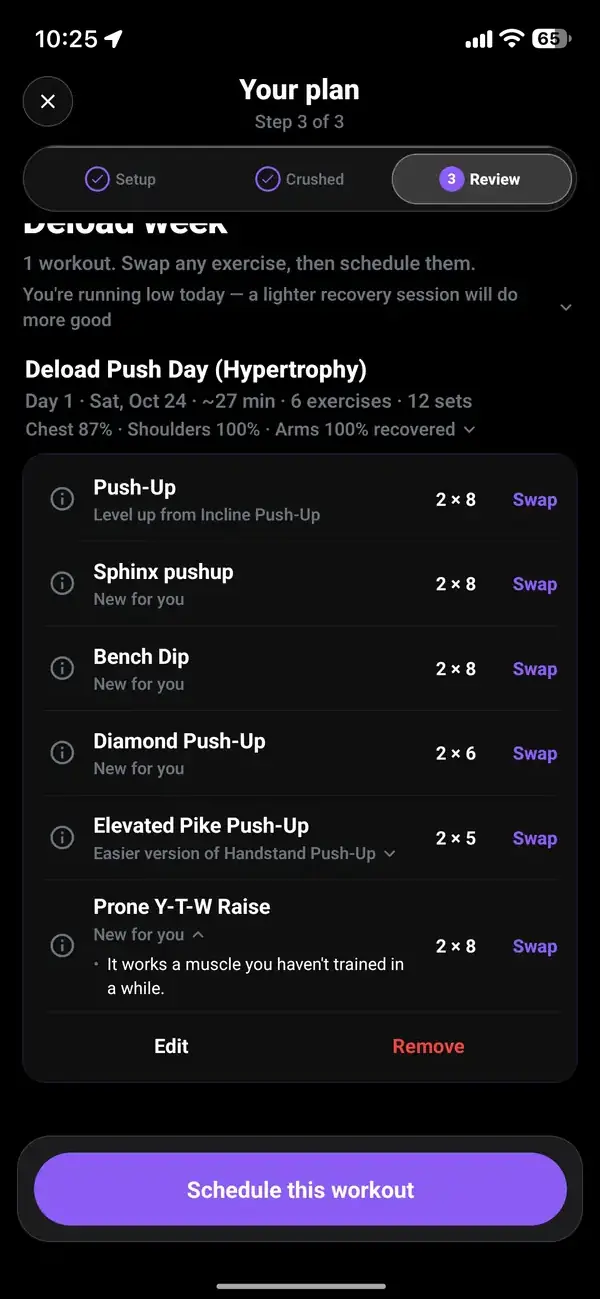
You don't book a deload on a calendar. S.H.A.R.P adds a lighter week after a run of hard training, and a string of poor daily check-ins can bring it forward. You see it coming on your schedule and can still swap any exercise.
Keep exploring Workout With Me
How a deload week fits into a block of hard training
A deload week is a planned stretch of easier training, with lighter weights and less volume, that comes after a run of hard work. You keep training the same lifts on your usual days, just far enough below your limit that built-up fatigue can clear.
Picture the sixth week of a good block. Your squat has gone up almost every session, and now the working weight that flew a fortnight ago feels heavy from the first rep, your warm-ups take longer to feel right and you're sleeping worse. The tempting move is to push harder and win the progress back. More often the progress is still there under a layer of fatigue, and a week of easier training is what lets it show again.
A good deload keeps the habit and the movement patterns and drops the stress. Most lifters do the same exercises on their usual days with clearly lighter loads, fewer sets and every set finished well short of failure. It shouldn't feel like a test, and it isn't a week off either: you still turn up, and the week usually ends with the bar feeling lighter than it did before it began.
Workout With Me ties the deload to the training you've put in rather than to a date. Unless you've switched Auto Deload off, the engine follows how your recent training has gone and gives you a lighter stretch after a run of hard work, with the easier prescription built in. A busy month delays it and a heavy one brings it closer, so the easy week lands after the work instead of on a calendar square you spent ill or travelling.
Progressive overload builds fatigue alongside strength, so a planned deload week lets that fatigue clear before it stalls your lifts, with deload weights worked out per lift at 65 percent of max, 12 to 15 reps and half the sets.
Deload planning is part of the S.H.A.R.P engine, which new accounts can try on a limited number of plans and WWM Pro unlocks in full from $7.99 a month. Logging, the recovery body map and every social feature stay free on iPhone and Android. You can track a block yourself and add the planning when you want it.