See Your Recovery, Muscle by Muscle At a Glance
A color-coded body map across 19 subcategories. Train only what's ready.



Also on Google PlayAlso on iPhone
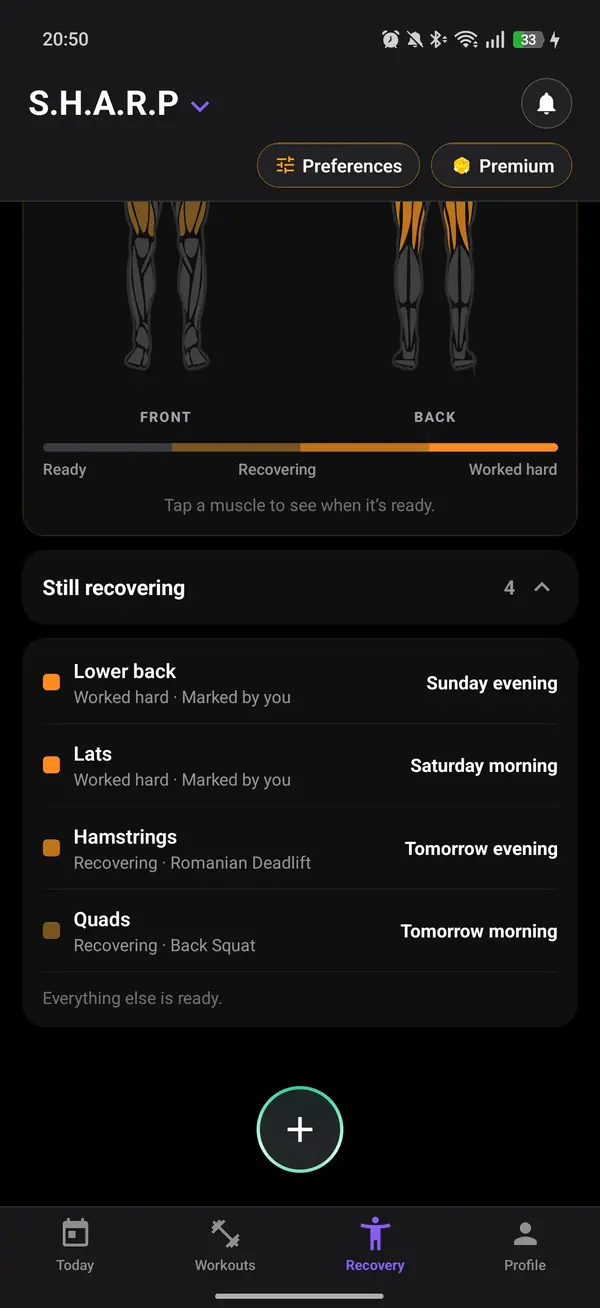
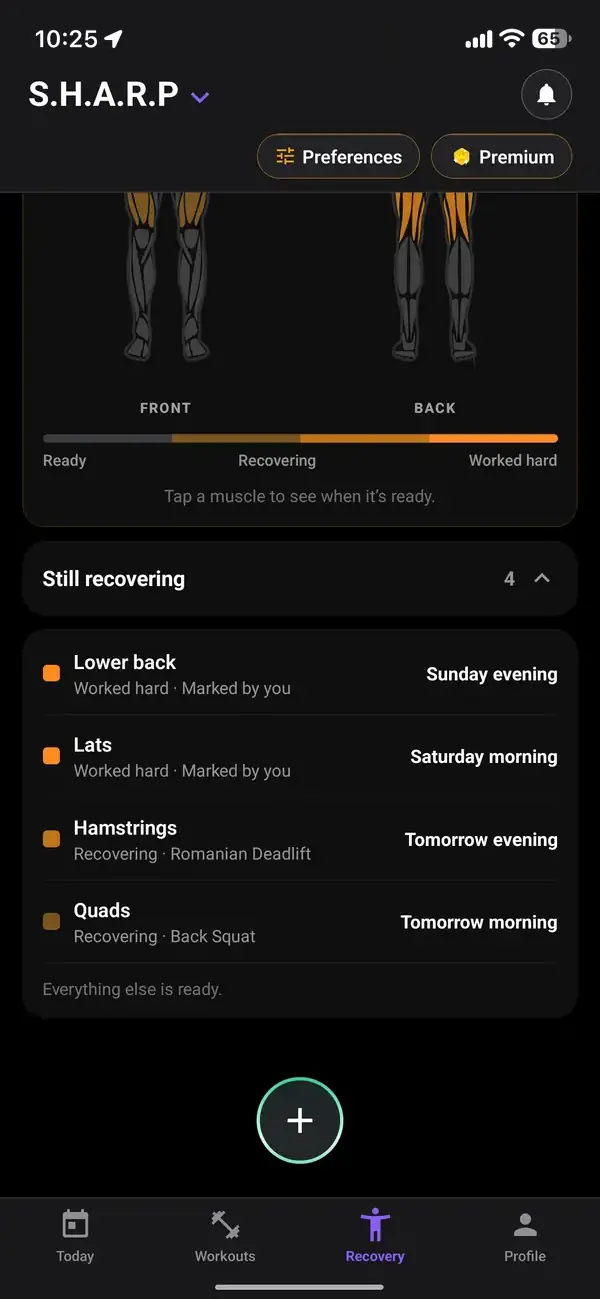
In the app, the map keeps itself current
The checker above reads one session. The app reads every set you log, so last Thursday's bench still counts on Monday.
Every muscle on its own clock
A squat moves your quads most and your glutes and lower back a little less. Each muscle shows as ready, recovering or worked hard, with a time like Tomorrow morning.
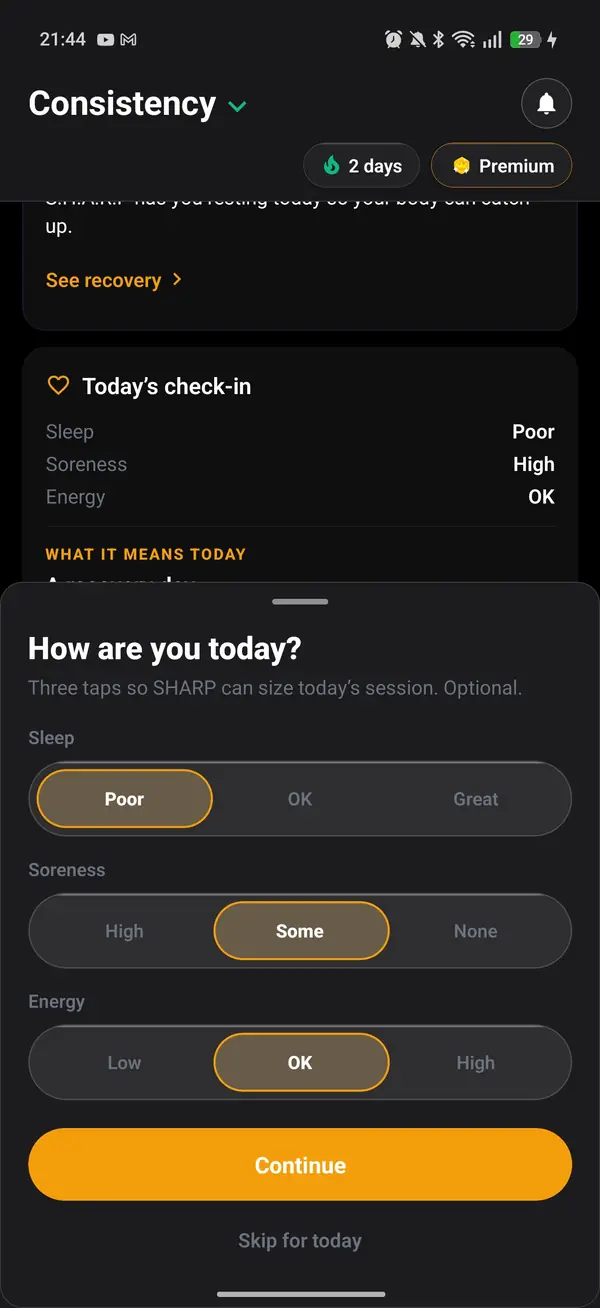
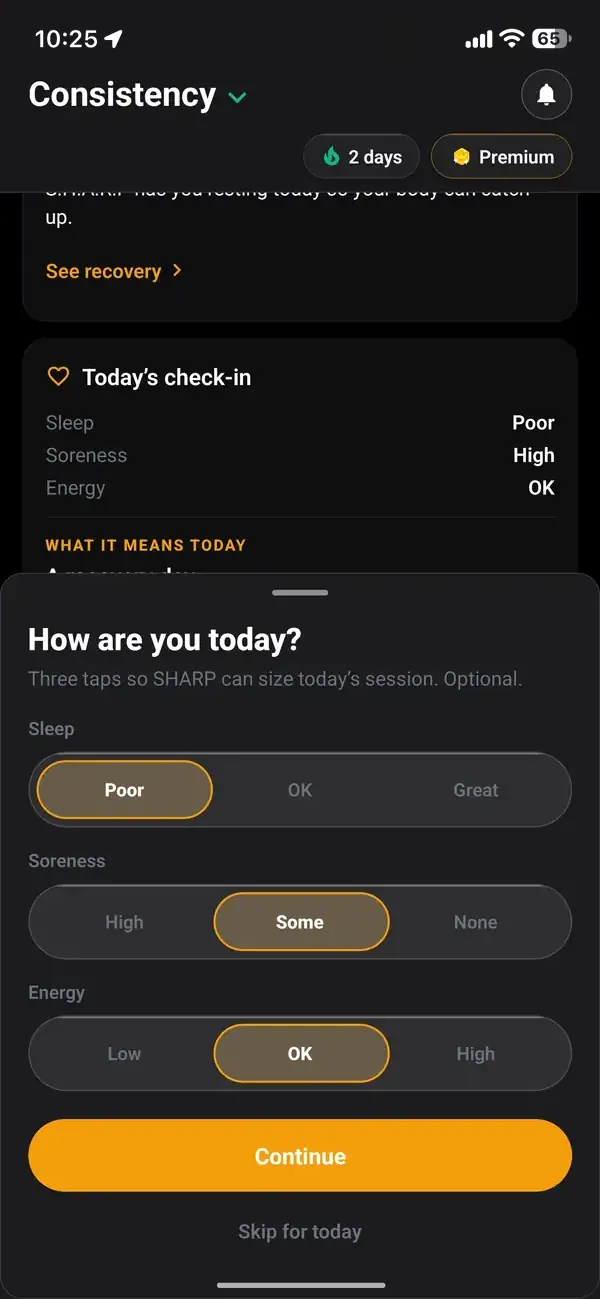
Three taps each morning
Rate your sleep, soreness and energy. A rough night makes that day's plan lighter. In a hurry? Tap Skip for today.
Add what it couldn't see
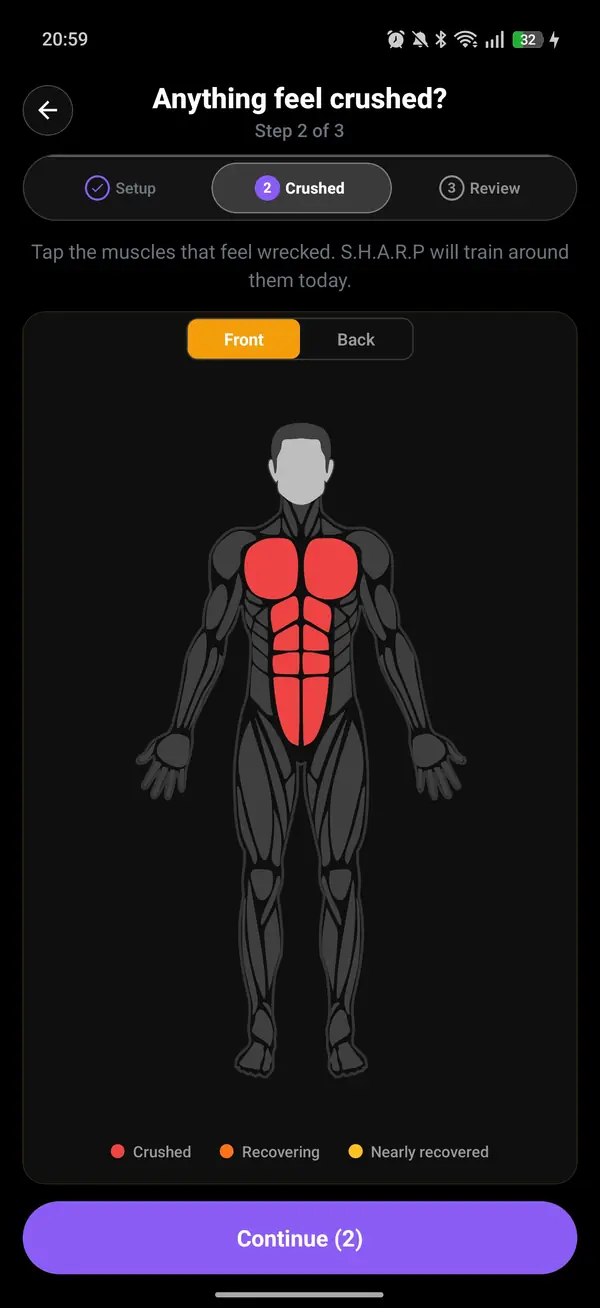
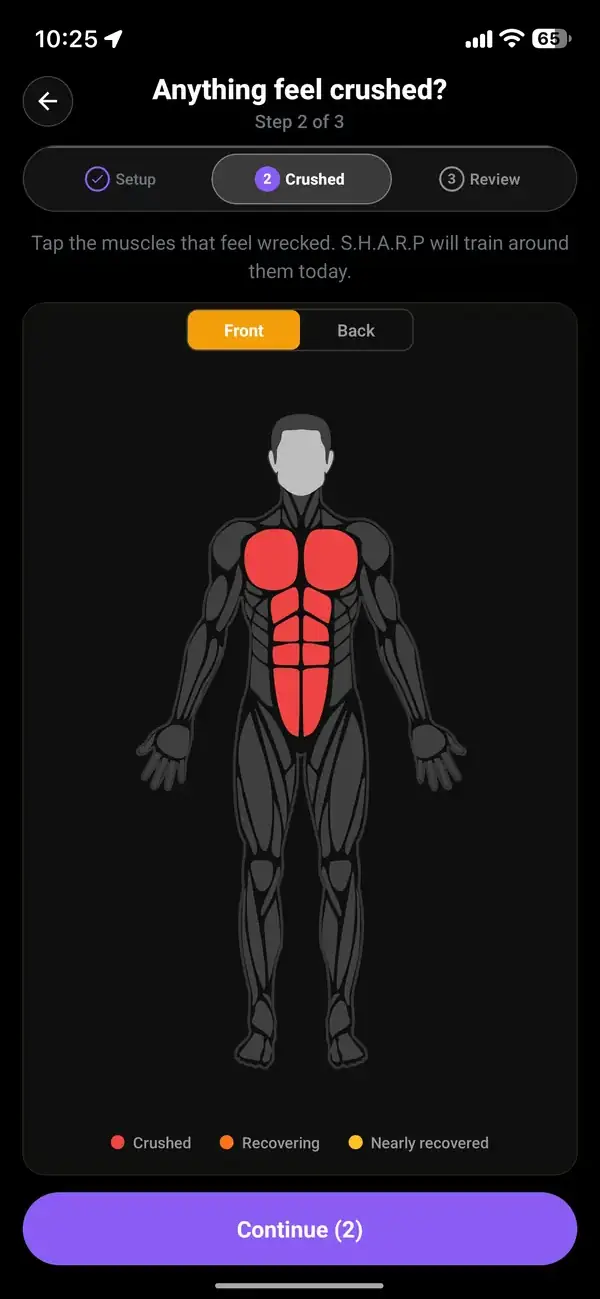
A football match, a climbing class, a long hike. Mark the muscles that feel crushed and S.H.A.R.P plans around them for a day or two.
Plan from what's ready
Start with the map, not the plan you wrote on Sunday. If your back is ready and your chest is still recovering, pull today and push tomorrow gets you two strong sessions instead of one tired one.
Watch the small muscles
Your triceps work on every press and your biceps on every row and pull up. Put an arm day straight after a push or pull day and those small muscles rarely get a proper break. The map shows it before your lockouts start to slip.
How the recovery system reads your last few sessions
Muscle recovery tracking keeps a separate recovery clock for each muscle you train, so you can see which parts of you are ready for hard work and which are still rebuilding. In Workout With Me those clocks run from the sets you log and show up on a colour-coded body map.
Say you benched heavy on Thursday, squatted on Saturday and spent Sunday afternoon playing football. By Monday you know you're tired in a general way, but not that your upper chest is still short of ready while your back hasn't been touched for a week. That gap between a vague feeling and a muscle by muscle picture is what the recovery system fills. It splits your body into 6 categories, legs, chest, back, shoulders, arms and core, and then into 19 subcategories, so upper, middle and lower chest each run on their own clock instead of sharing one label.
Each clock's length comes down to two things: how long you've been training and how directly an exercise loaded that muscle, so the muscle that drove a lift gets more time than one that only steadied it. The body map shows the result as colour that fades as each muscle comes back, and the Muscle Breakdown labels every group CRUSHED, IN RECOVERY or RECOVERED with a percentage and the time left. Anything the app couldn't see, like that Sunday football, goes in through Mark crushed muscles: you tap what feels wrecked and it counts the same as a logged session.
It's a model, not a scan. It works from what you did rather than from a sensor or a blood test, and it can't see a short night, a stressful week or a cold coming on, all of which slow recovery down. Treat it as a far better starting point than soreness, which fades on its own timetable, and listen when your first working set feels wrong. Pain in a joint, or pain that sharpens as you lift, is a reason to stop and see a physio or doctor, not something a body map can answer.
Workout With Me gives you the body map, the Muscle Breakdown and workout logging free on iPhone and Android, with no wearable to buy. If you want the next session built from that map, WWM Pro adds the S.H.A.R.P engine from $7.99 a month. It only ever schedules a muscle once it's at least 80% recovered.