October 2, 2026 · 7 min read
Beginner Park Calisthenics
A three-day park calisthenics program for beginners, with an easy-to-hard ladder for every movement, so you can start before your first pull-up.
July 26, 2026 · 7 min read
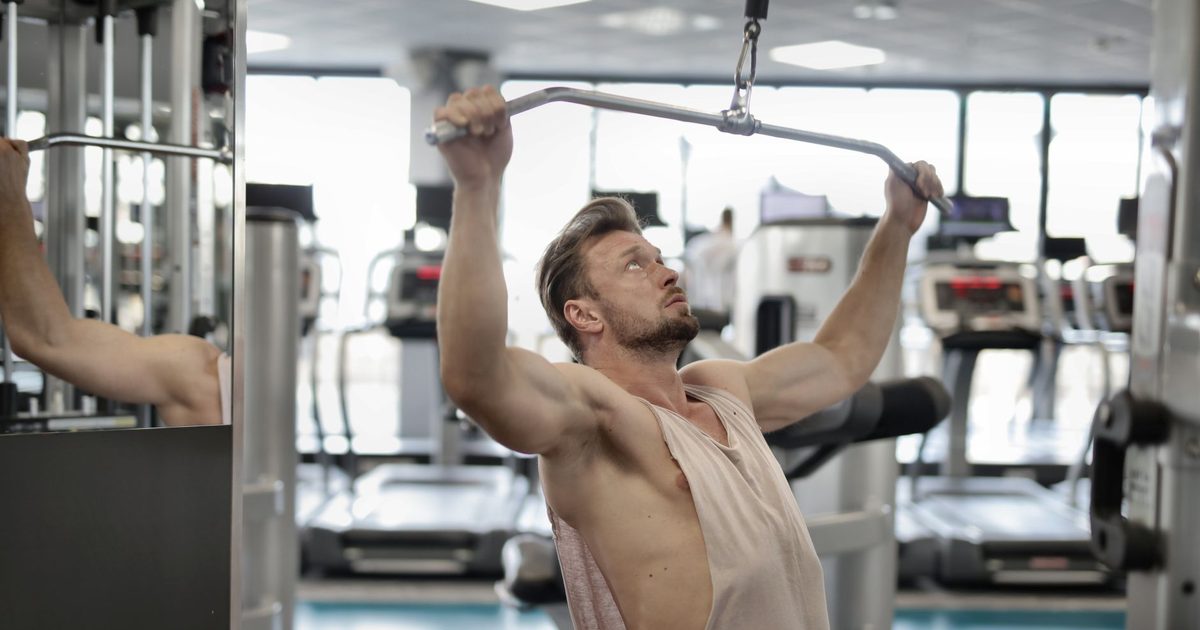
Pull day is every exercise where you pull a weight towards you, or pull yourself up to a bar, so it trains the whole back of your upper body: the lats down the sides of your back, the traps and rhomboids between your shoulder blades, the backs of your shoulders, and the biceps and forearm muscles that bend your elbow. A beginner menu needs only five exercises to cover all of that: a lat pulldown, a seated cable row, face pulls, dumbbell curls and hammer curls. With sensible rest it takes about 45 minutes. Below you'll find which muscle each exercise is there for, the full session with sets, reps and rest, and how often to repeat it.
Pull day comes down to two directions of pulling, plus the arms. Pulling down from overhead, as in a pulldown or a pull-up, is mostly the job of the lats. Pulling straight back towards your stomach, as in a row, brings in the muscles that squeeze your shoulder blades together. Your biceps help with every pull, but only as helpers, which is why the session ends with curls that train them directly. If you can name the muscle an exercise is for, you'll also know where you should feel it, and that's the quickest way to tell a good rep from a sloppy one.
| Muscle | Where you feel it | The exercise for it here |
|---|---|---|
| Lats | Under the armpits and down the sides of your back | Lat pulldown |
| Rhomboids and middle traps | Between the shoulder blades | Seated cable row |
| Rear delts | The back of the shoulder | Face pull |
| Biceps | The front of the upper arm | Dumbbell curl |
| Brachialis and brachioradialis | The outside of the upper arm and the top of the forearm | Hammer curl |
Some programmes put deadlifts on pull day as well. For a first pull day I'd leave them out. A deadlift trains your legs and lower back as much as anything on this list, and it's a lift worth learning on its own, with fresh legs and someone who can watch your form.
Warm up with five minutes of easy cardio, then do one or two light sets of the pulldown before your working weight. After that:
The order isn't random. The American College of Sports Medicine's position stand on progression in resistance training recommends putting exercises for large muscle groups before small ones, and exercises that move several joints before those that move one, so the lifts that need the most from you get you at your freshest. The same position stand suggests a load you can lift for 8 to 12 reps for people new to lifting, which is where the two big pulls sit. Choose a weight where the last two reps of each set are hard but still clean. If you finish all 12 reps and could have done several more, it's too light.
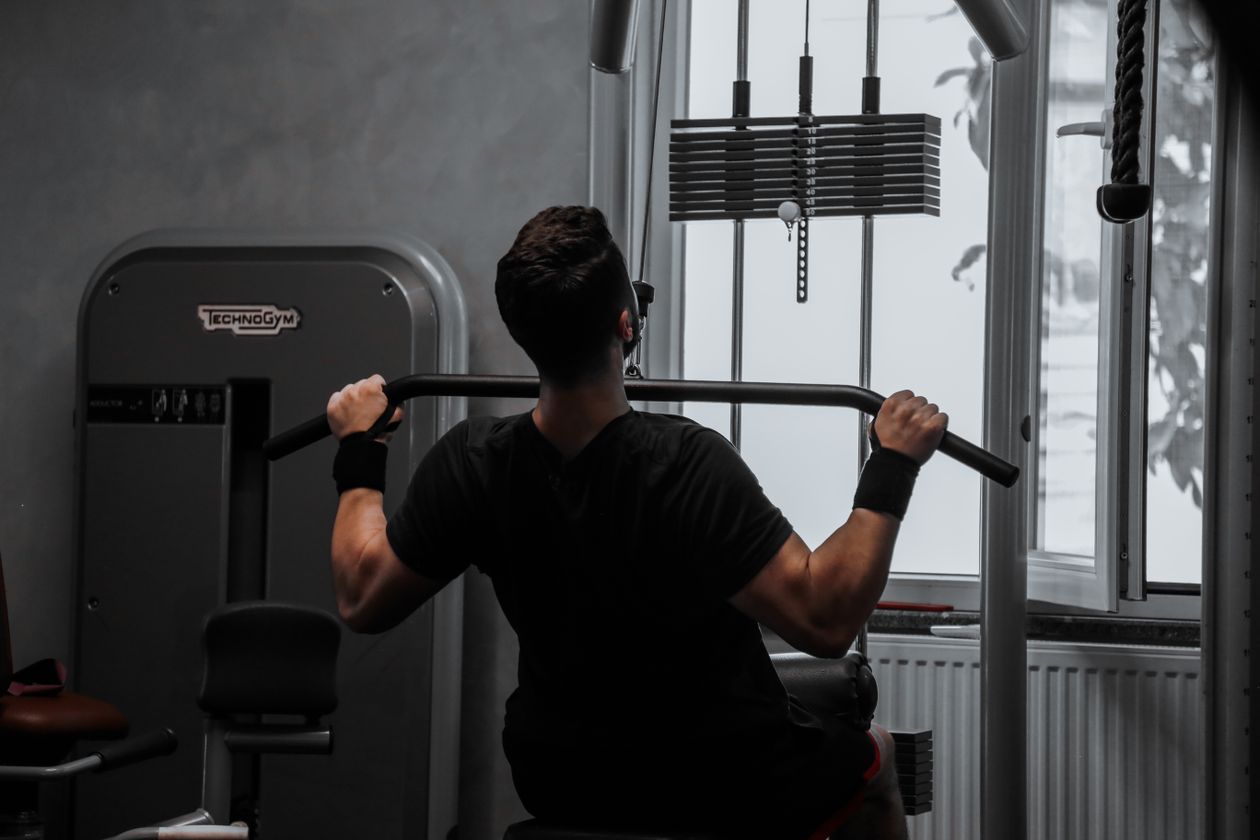 Photo: Doğu Tuncer, Pexels
On the pulldown, tuck your thighs under the pad, take the bar a little wider than your shoulders and sit tall with your chest up. Pull the bar to the top of your chest by driving your elbows down towards your sides, then let your arms straighten all the way at the top so your lats get a full stretch. A slight lean back is fine. If you have to rock your whole body backwards to move the weight, it's too heavy, and the rep has turned into a swing that your lats barely notice.
On the cable row, sit with your knees slightly bent and your back straight, and pull the handle to your stomach with your elbows close to your body. At the end of each rep, squeeze your shoulder blades together, then let them spread forward again as the handle goes back, without rounding your lower back. Your torso should stay almost still. Many beginners feel their first pull days mostly in their arms. Thinking about where your elbows go, rather than your hands, usually moves the work back where it belongs.
The face pull and the curls train small muscles, and small muscles don't need big weights. A 2017 meta-analysis of 21 studies compared lighter loads (60% of a one-rep max or less) with heavier ones and found that both built similar amounts of muscle when every set was taken to failure, the point where no more reps were possible, while the heavier loads did better for maximal strength. In those studies the light sets were worked very hard, so "light" still means the last reps should be a struggle. That's why face pulls and curls sit at higher reps here: a heavy face pull turns into a shrug and a lean back, and a heavy curl turns into a swing. You also don't need to grind every set into the ground. A 2022 meta-analysis of 15 studies, all in young adults, found that training to failure wasn't needed for gains in strength or size, so stopping a rep or two short with good form is enough.
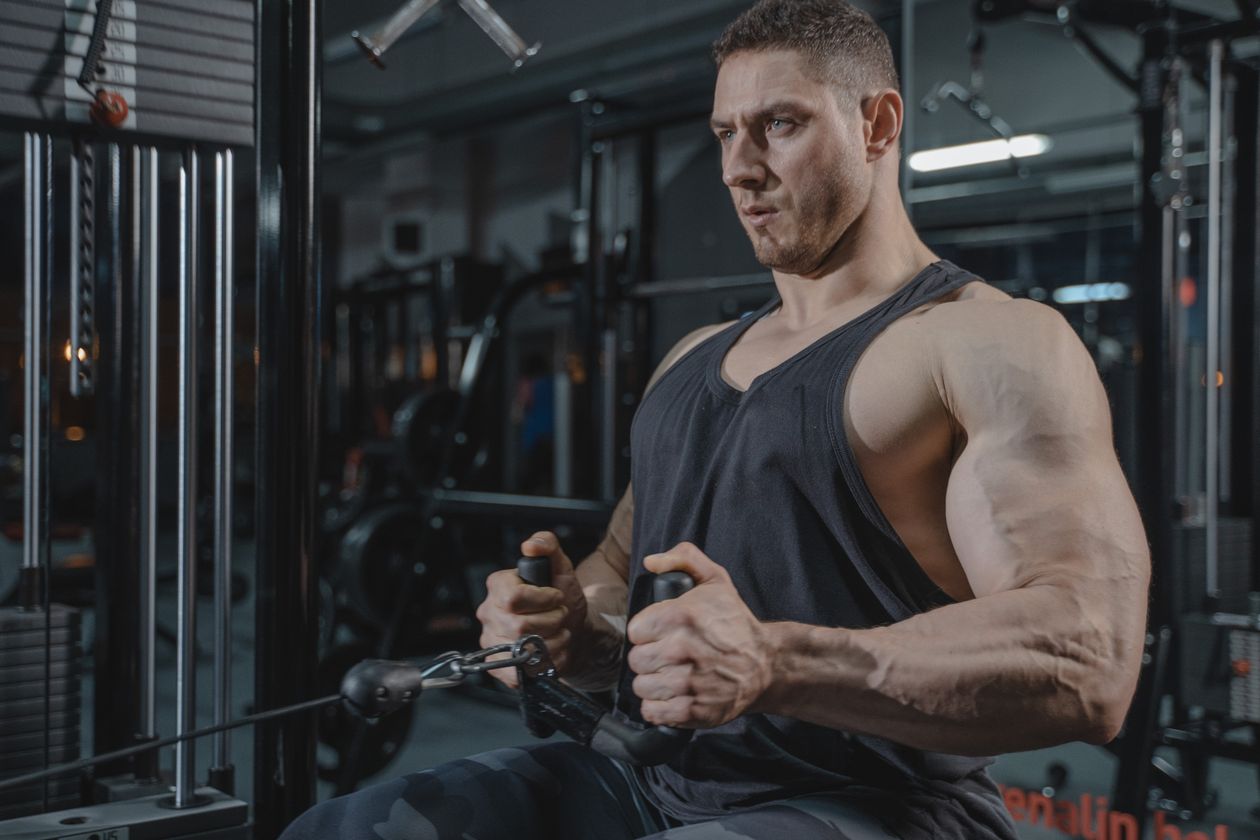 Photo: Tima Miroshnichenko, Pexels
A 2016 meta-analysis of 10 studies found that, with the total amount of work kept the same, training a muscle twice a week built more muscle than training it once. A push, pull and legs split done once a week only reaches each muscle once. That still works, especially at the start, but if you can train six days a week, running the split twice gets your back and biceps their second session. If you can only manage three days, a full-body or upper and lower split fits that goal better. Whichever you choose, the progression is the same: when you can do the top of the rep range on every set with clean form, add a little weight next time, which is the progressive overload our strength training guide is built around. Soreness the next day is normal, especially in the first few weeks. Sharp pain in an elbow or shoulder during a pull isn't, so stop that exercise and get it checked by a doctor or physio if it doesn't settle.
Workout With Me lets you log every set of this session and keep your personal records for free, and its recovery body map shows the muscles you trained lighting up after pull day and fading back as they recover. If you'd rather not plan the split yourself, the S.H.A.R.P training plans can build a push, pull and legs cycle for you, and they won't schedule a muscle until it's at least 80% recovered. You can try them free, and unlimited plans come with WWM Pro, from $7.99 a month. Finding someone to train with is free forever: see who's working out at gyms near you and join their session, or host your own. Start with the free workout planner, or download the app on the App Store or Google Play.
October 2, 2026 · 7 min read
A three-day park calisthenics program for beginners, with an easy-to-hard ladder for every movement, so you can start before your first pull-up.
September 28, 2026 · 6 min read
The best AI workout apps in 2026, compared honestly: Fitbod, JuggernautAI, Dr. Muscle, RP Hypertrophy and more, including where each one actually wins.
September 2, 2026 · 9 min read
Thirty minutes is enough for a full body session. A lunchtime gym workout timed minute by minute, built on three pairs of exercises.