
August 29, 2026 · 8 min read
Gym Buddy vs Personal Trainer
A trainer teaches you and tends to get you stronger faster. A gym buddy is free and gets you through the door. What the research says, and how to pick.
September 26, 2026 · 8 min read
Training with a gym buddy mostly changes two things: you skip fewer sessions, and you tend to keep going longer and get a few more reps out of hard sets, especially when someone is spotting you. Training alone gives you the opposite: nobody else's calendar can cancel your workout, you never wait through someone else's set before your own, and the session runs at exactly your pace. So pick a partner if what holds you back is turning up, or lifting heavy without anyone behind the bar, and stay solo if your hours change every week or you already turn up without fail. Plenty of lifters end up doing both, and the table at the end shows how to split it.
The clearest evidence for training with someone is about attendance, not effort. A 1995 study followed married adults through twelve months of a university fitness programme. The people who had joined with their spouse came to 54% of sessions a month on average, against 40% for married people who had joined on their own, and only 6% of them dropped out over the year, against 43%. The two groups didn't differ on a self-motivation questionnaire, so the couples weren't simply keener people to begin with, and the authors put the difference down to support from the spouse. It's a small study, 16 couples against 30 people on their own, and a spouse is not the same as a gym buddy, but the pattern is the one most people recognise: a feeling of motivation comes and goes, while a person who expects you at six doesn't. The same study carries the warning, too. Within each couple, the two spouses' attendance tended to move together, which is the risk of leaning on one person. If your buddy moves away or loses interest, your habit can go with them unless you've also learned to go alone.
There's also decent evidence that someone beside you makes you last longer in a session, though most of it comes from the lab with on-screen partners. In a 2012 study, 58 young women rode a stationary bike at a set intensity on six separate days, either alone or with a partner on screen who was made to look better than them. When the team's score depended on whoever stopped first, they rode for about 22 minutes on average, against about 11 for those riding alone, and simply riding alongside the partner got them to about 20. A 2019 study by the same group in 85 middle-aged adults found no such effect on how hard people pushed the pedals, as opposed to how long they kept going. So the honest summary is that a partner seems to help with persistence, and the evidence that they make each effort harder is mixed. In the gym, persistence is a lot of what matters: the last set you'd have skipped, the extra exercise at the end, the session you didn't cut short.
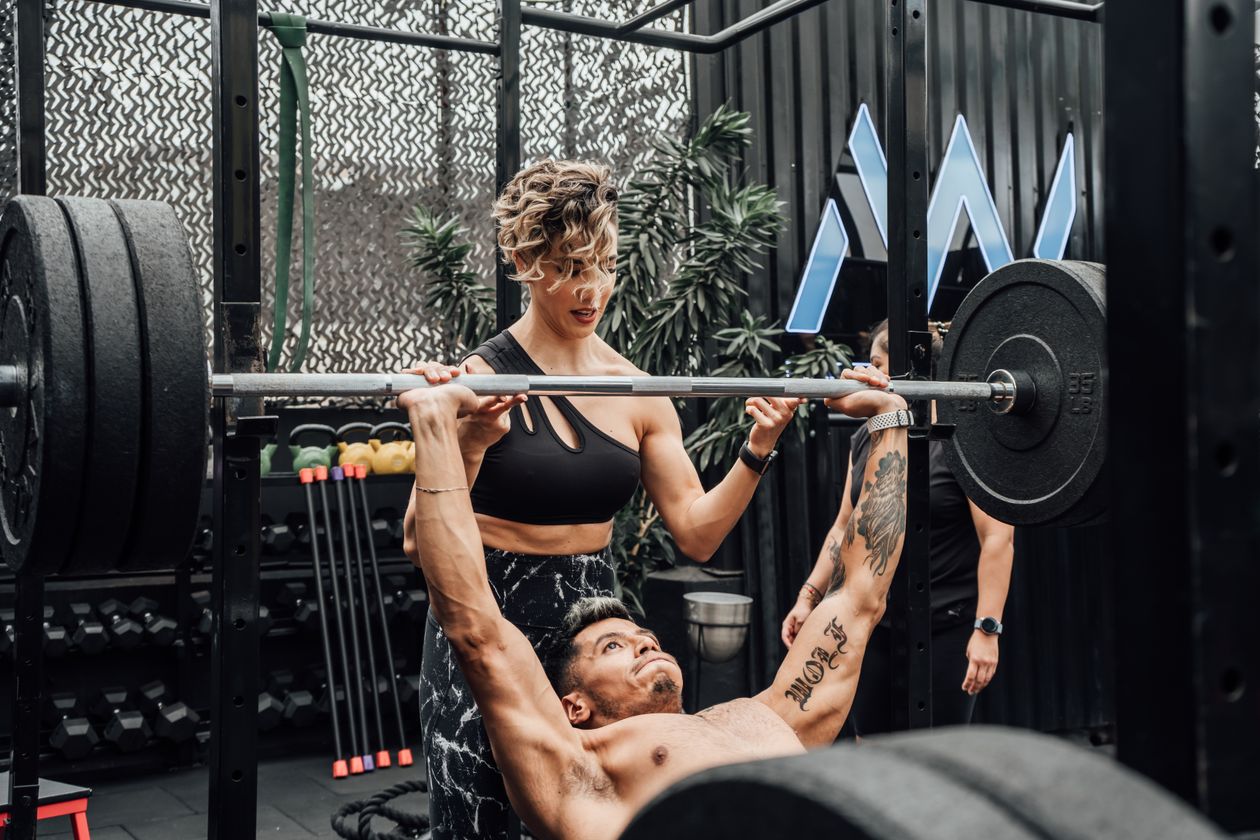 Photo: Miguel González, Pexels
Spotting is where a partner makes the most direct difference to a lifting session. In a small 2019 study, 12 recreationally trained lifters did three sets of the bench press to failure at 60% of their maximum, once with spotters standing in plain view and once with the spotters hidden. With the spotters visible they managed 4.5 more reps in total across the three sets, rated the work as easier, and felt more confident. Twelve people is very few, but it matches the habit most solo lifters fall into, stopping a rep or two early because nobody is there if the bar stalls. Safety is the other half. The National Strength and Conditioning Association's standards say attentive spotting must be provided, together with equipment such as power racks, for any free-weight exercise where the weight rests on the trunk or moves over the head or face, which covers bench presses and back squats. Those standards were written for supervised facilities, but the logic holds on any gym floor, and US emergency department data from 1990 to 2007 found that a weight dropping on the person was the most common way people got hurt in the injuries they recorded. If you train alone, set the safety arms of a power rack just below the bottom of your rep, or save your sets close to failure for machines and dumbbells. If you've had a shoulder, back or chest injury, check with a doctor or physio before pushing heavy presses to failure, with a spotter or without.
Training with someone has real costs, and they're mostly about time. Every session needs a slot you can both make, so a late meeting on either side cancels it or moves it, and a partner who's fifteen minutes late leaves you warmed up and waiting. Taking turns on one station also stretches the session, because your rest is now the length of their set, which is fine on heavy compound lifts and slow on a long list of accessory work. Strength gaps add their own friction. If one of you benches twice what the other does, every round turns into stripping and reloading plates, and the weaker lifter often feels like they're holding the session up. The strength compatibility calculator shows how close two lifts need to be for sharing a bar to work. Then there's the chat. A rest period that turns into ten minutes about the weekend lets you cool down and cuts into the next set, so the best partnerships agree early on that the talking stops when the hands go on the bar.
Training alone is simpler, and for a lot of people that's enough. You go at whatever hour your day leaves open, including the quiet mid-afternoon or late-evening slots when the gym is half empty, and you never negotiate a start time. You follow your plan exactly, with your own exercises, your own rest periods and your own order, and nobody's preference for chest day changes it. Many lifters also find they concentrate better with headphones in and nobody to talk to, which helps on technical lifts where you want your full attention on the movement. The trade is that everything rests on you. Nobody notices when you skip, nobody stands behind the bar, and nobody points out that your squat depth has been creeping up for a month. If you train alone and keep turning up, none of that matters much, and if you train alone and keep skipping, it's usually the first thing worth changing.
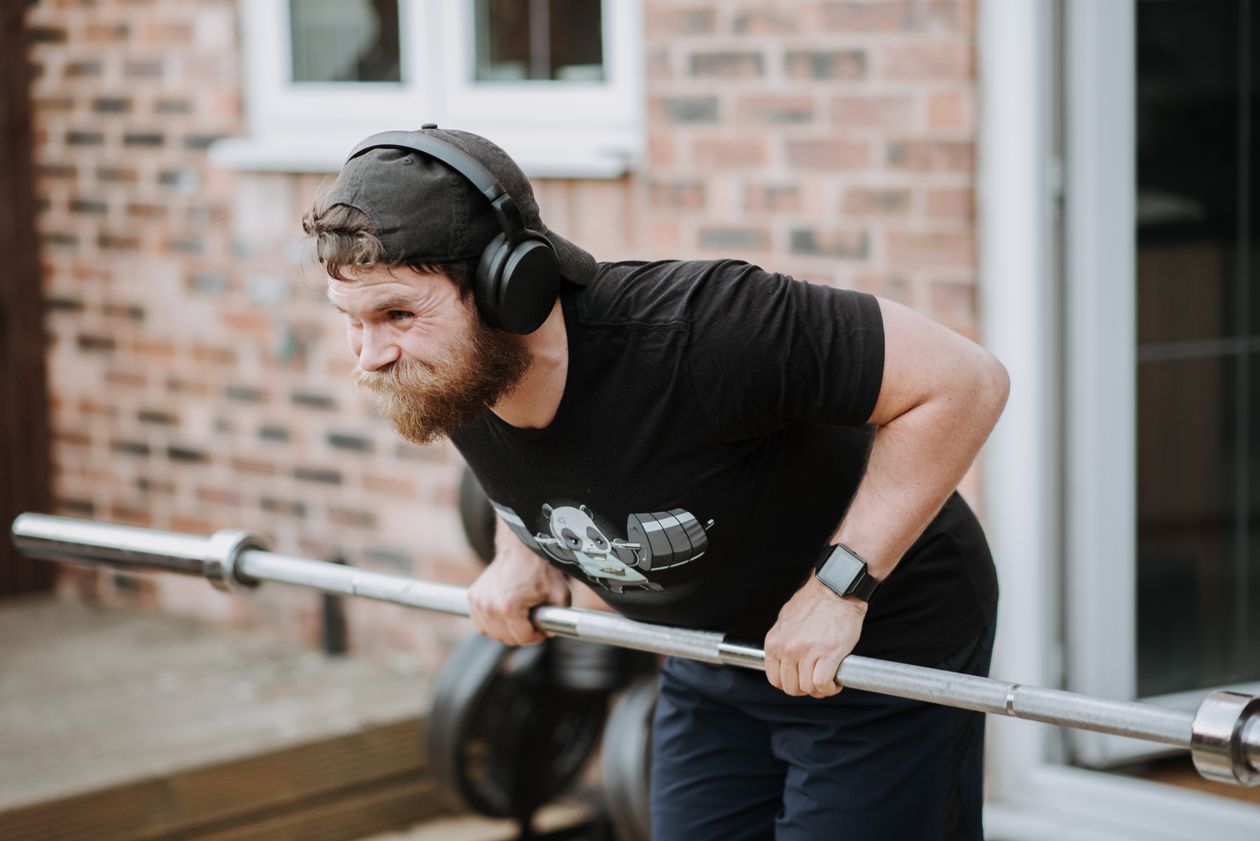 Photo: Anete Lusina, Pexels
| What holds you back | Better pick |
|---|---|
| Skipping sessions | A gym buddy with a fixed weekly slot |
| Heavy bench or squat sets | A partner to spot, or a power rack with safety arms set |
| Hours that change every week | Training alone |
| Short sessions, tight on time | Training alone, or a partner for compound lifts only |
| Losing focus between sets | Training alone, or a partner who agrees to keep rest short |
| A partner much stronger or weaker | Training alone, or a partner closer to your level |
If several rows apply, split the week. Do your heavy compound days with a partner, when the spot and the fixed time help most, and do your accessory or conditioning work alone, when speed and flexibility matter more. Give the arrangement a month and count the sessions you made, because the setup that gets you through the door more often is the better one for you.
If you decide a partner is what you're missing, Workout With Me helps with the two hard parts, timing and level. It shows workout sessions at gyms and parks near you on a live map, so you can join one at your hour or host your own, now or later, and approve who joins. Each host shows a strength compatibility match percentage, based on how closely your strength lines up muscle group by muscle group, so you can find a workout partner who can share a bar with you. If you mostly train alone, workout logging, personal records and the recovery body map are free as well, and the social side is free forever. Download it on the App Store or Google Play.
August 29, 2026 · 8 min read
A trainer teaches you and tends to get you stronger faster. A gym buddy is free and gets you through the door. What the research says, and how to pick.
August 3, 2026 · 8 min read
Turn up on time, cancel early, spot with full attention and keep your phone away. The habits that make you the gym buddy people want to keep.
July 16, 2026 · 7 min read
Start with people who already train at your hours. How to find a gym buddy through friends, your own gym, classes, clubs and apps, and how to ask.
