
October 4, 2026 · 6 min read
No Perfect Program, Recovery Decides
Still hunting for the perfect workout program? There isn't one, because recovery decides what any program does to you. Here's why systems fail here.

October 11, 2026 · 8 min read
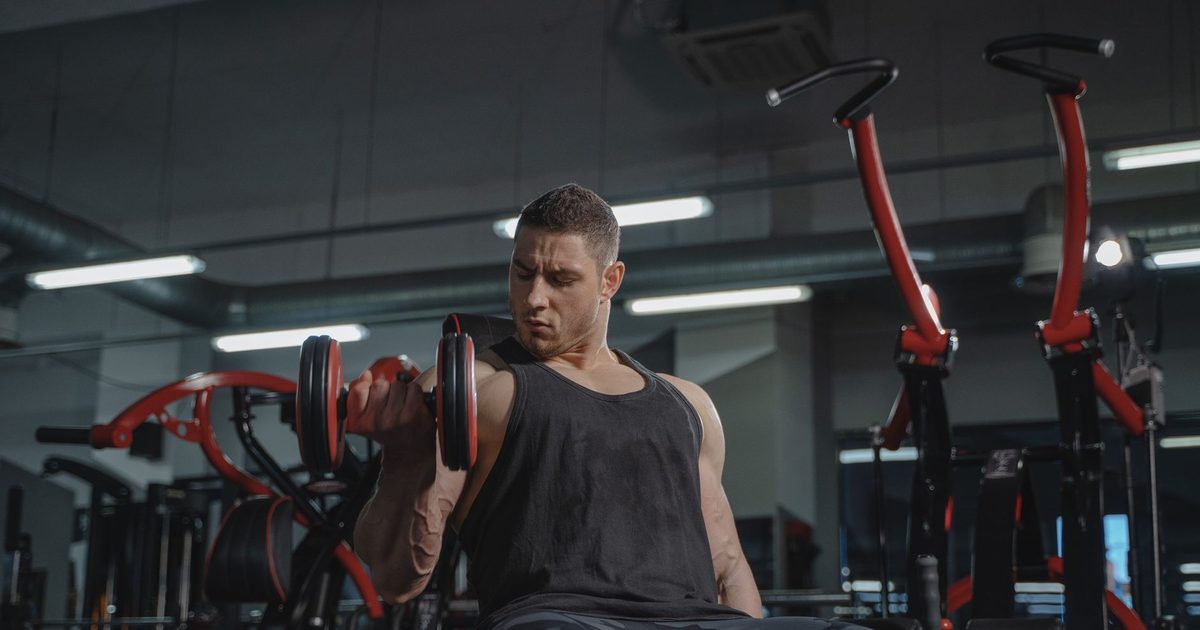
You sit down at the bench after seven full days away, load up the exact weight you lifted last Monday, and tell yourself you haven't lost a single unit of strength. I used to do this exact same dance every time life, work, or travel derailed my routine. If you are navigating training after a break, rushing straight back into your old max weights is the fastest path to crippling soreness and ruined momentum.
When life interrupts your gym routine for seven to ten days, your first instinct is usually panic mixed with overcompensation. You feel guilty about the skipped workouts, so you try to cram an entire week of lost gains into your very first workout back. You walk up to the barbell, set it to your old working weight, and grind out as many reps as your body will allow.
The problem is that your body interprets this sudden surge of high intensity completely differently than you do. After seven days without heavy mechanical tension, your neurological pathways for high-threshold motor unit recruitment are slightly sleepy. Your muscle tissue hasn't withered away, but the fluid and glycogen stored inside the muscle cells have dropped slightly. When you throw maximum load at a muscle in this state, you force a small pool of motor units to absorb excessive stress.
What happens next is predictable. You finish the workout feeling victorious, only to wake up forty-eight hours later barely able to bend your arms or sit on a chair. That level of severe delayed onset muscle soreness (DOMS) isn't a sign of a successful workout. It is proof that you overshot your body's current tolerance capacity. Instead of stepping right back into a steady rhythm, you spend the next five days hobbled on the couch, effectively extending your forced break by another week.
During your first set back in the gym, something deceptive happens. The weights might feel surprisingly light during your warmups. You might mistake this sudden surge of freshness for supercompensation, assuming your body spent the week away building incredible amounts of new muscle.
In reality, your central nervous system is completely rested. The systemic fatigue that normally builds up across consecutive weeks of heavy lifting has entirely drained away. Your joints feel smooth, your mind is excited, and your grip feels strong. This mental and nervous system baseline makes you feel invincible during reps one through five.
But local tissue capacity tells a totally different story. While your brain is eager to push heavy weight, your connective tissues and muscle fibers have temporarily lost their resistance to damage. The protective repeated bout effect, which is the adaptation that keeps you from getting sore every single week, degrades rapidly when stimulus stops. When you load that fresh nervous system with old maximum volume, you produce severe micro-tears in the muscle fibers. You feel amazing during the workout, but the physiological bill arrives two days later.
To restart your momentum without blowing up your recovery, you need a precise calibration protocol. Do not guess, and do not let your ego choose the plates. Handling training after a break requires treating your first week as a priming phase rather than a personal record phase.
Here is the exact framework I use and recommend:
For a break lasting 7 to 10 days:
For a break lasting 2 to 3 weeks:
This reduction feels counterintuitive when you are eager to make up for lost time. (I used to hate leaving the gym feeling like I had two more sets left in me.) But this deliberate step back gives your muscle tissue a chance to reactivate the repeated bout effect without triggering catastrophic inflammation.
Let us walk through a concrete example of how a practical return week looks compared to a typical training week. Suppose you follow an upper body split and your target main movement is the barbell overhead press.
On a normal training week, your overhead press workout might look like this: Set 1: 135 lbs x 8 reps (RPE 8) Set 2: 135 lbs x 8 reps (RPE 8.5) Set 3: 135 lbs x 8 reps (RPE 9) Set 4: 135 lbs x 7 reps (RPE 10 to absolute failure)
If you attempt that exact structure on your first day back after a week off, your recovery metrics will plummet off a cliff. Your shoulders and triceps will take five to seven days to recover, completely wrecking the rest of your week's training split.
Instead, adjust your priming session like this: Set 1: 115 lbs x 8 reps (RPE 6) Set 2: 115 lbs x 8 reps (RPE 6.5) Set 3: 115 lbs x 8 reps (RPE 7)
Stop right there. You skip the fourth set entirely. You exit the gym feeling energized, slightly pumped, and completely capable of lifting again in two days. Because you capped the stress, your muscles repair within 48 hours instead of 120 hours. On your next session four days later, you can safely bump the weight to 125 pounds for four sets. By week two, you are back to full working weights, zero severe soreness, and full momentum restored.
The hardest part of coming back is not physical; it is mental. You load up a weight that used to be easy, and it feels noticeably heavier in your hands. Your brain immediately jumping to the worst case scenario is completely normal. You start worrying that months of hard work vanished during seven days on vacation or lying in bed with a cold.
Remind yourself of how muscle physiology works. Real contractile muscle loss takes weeks of absolute bed rest or starvation to occur. What you are experiencing on day one is simply a temporary drop in neurological efficiency, local glycogen storage, and hydration.
When you accept that temporary drop as a routine biological delay rather than a failure, you stop making foolish emotional decisions at the rack. You do not need to prove your fitness to anyone during a reset week. The goal of your first session is simple: stimulate the tissue, signal to your body that demands are returning, and get out of the gym cleanly.
A successful return week is not just about modifying individual sets; it is about how the whole week flows. When you understand that recovery dictates your training timeline, you stop forcing rigid calendar days to rule your life.
If you hit your legs on Monday after a break, you cannot blindly assume your lower body will be ready for another heavy session on Thursday just because your calendar says so. You have to evaluate local tissue fatigue. If your quadriceps or hamstrings are still deeply fatigued, forcing another workout onto those muscles destroys your progress.
Understanding how individual muscle groups bounce back is central to long-term gains. Learning the mechanics of recovery-based training helps you stop guessing when a muscle is ready to handle load again. When you schedule workouts based on actual muscular readiness rather than arbitrary days of the week, a missed week turns into a minor bump rather than a monthly setback.
Managing your weights and volume after time off is much easier when you do not have to guess your status. Workout With Me features a recovery tracking system with a visual color-coded body map covering 19 distinct muscle subcategories. When you log a workout after a break or self-report soreness using the "Mark crushed muscles" feature, the app visualizes exact recovery percentages across your whole body.
The built-in S.H.A.R.P. engine enforces an 80 percent recovery threshold before it will allow a muscle group to be scheduled for another hard session in an auto-generated plan. That means if your hamstrings are still locked in recovery from your return session, the app automatically shifts focus to muscle groups that are fully ready to work. If you want a personal training engine that adapts to your real life interruptions instead of ignoring them, try Workout With Me for free today on iOS or Android.
October 4, 2026 · 6 min read
Still hunting for the perfect workout program? There isn't one, because recovery decides what any program does to you. Here's why systems fail here.
September 18, 2026 · 6 min read
Alpha Progression vs Workout With Me: one nails progressive overload but has no recovery model at all. Here's my honest comparison of the two approaches.

September 13, 2026 · 6 min read
Recovery-aware training builds your week around when muscles are ready, not around a calendar. Here's why that beats any fixed program you can download.